

Morocco may be known for sunshine and warm weather, but the Atlantic Ocean around Tamraght and Taghazout is cooler than many first-time visitors expect.
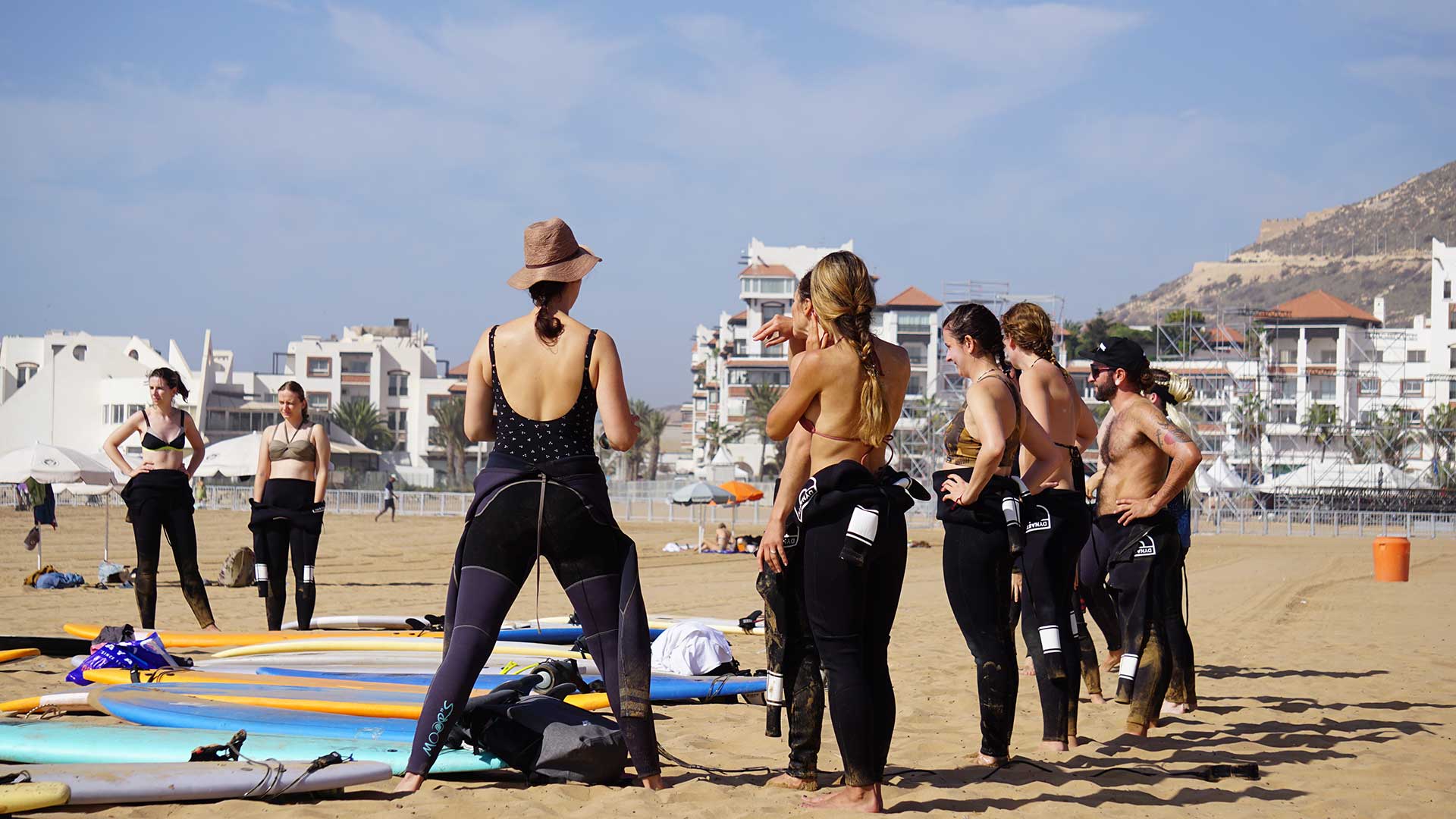
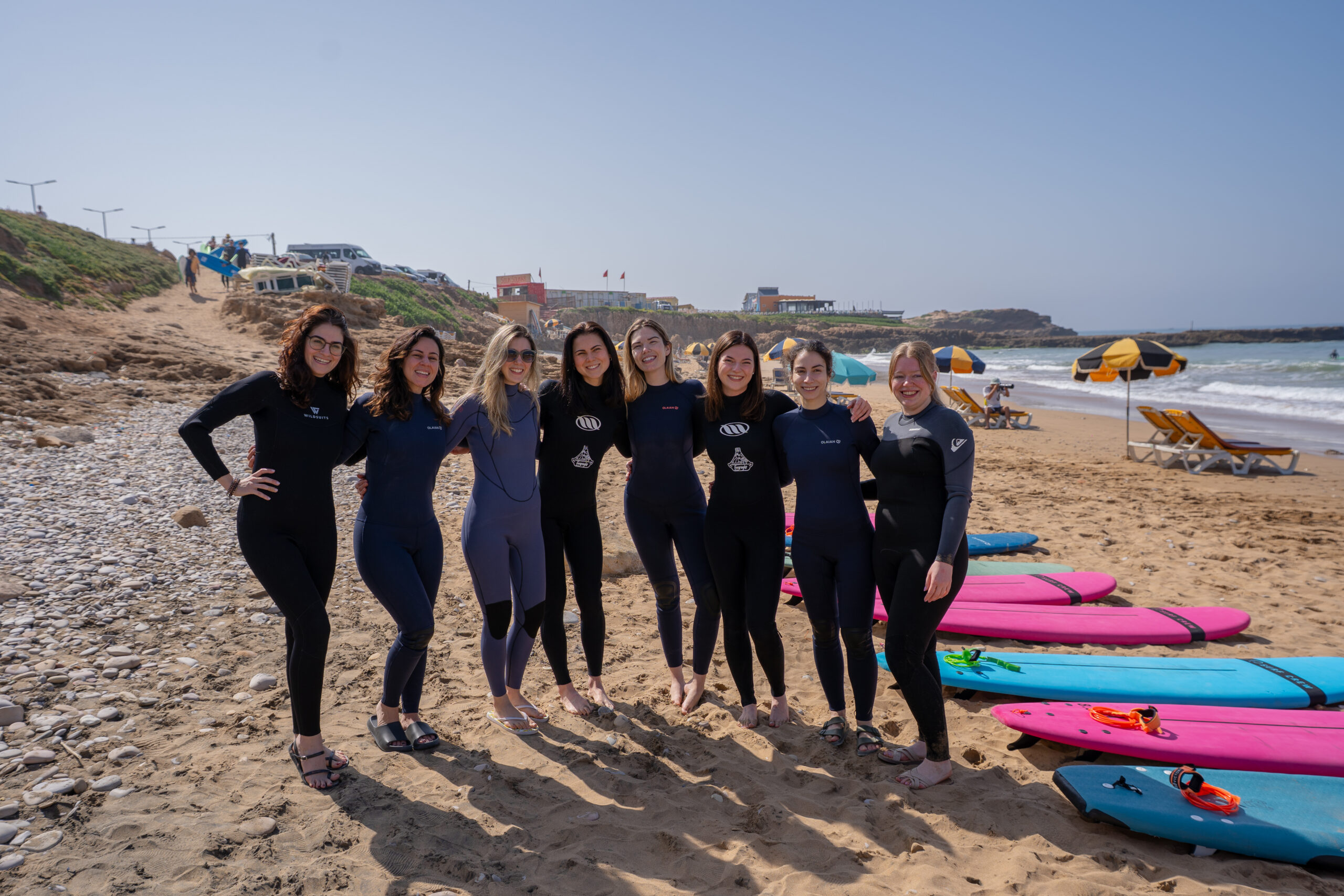
Most surfers wear a wetsuit throughout the year. A 3/2 mm full suit is the most versatile choice for much of the season, while a 4/3 mm can feel more comfortable during winter, particularly for longer sessions and anyone who feels the cold easily.
Water temperatures around Tamraght and Taghazout typically range from approximately 16–18°C during the coldest part of winter to around 20–22°C during the warmest weeks of late summer and early autumn. Most surfers use a 3/2 mm full wetsuit for much of the year, while a 4/3 mm may be preferable from December to March.
The right wetsuit does not depend on water temperature alone. Wind, air temperature, session length, activity level, wetsuit quality and personal cold tolerance all affect how warm you feel.
This guide explains Morocco’s surf water temperature month by month, which wetsuit thickness to choose and what beginners should know before entering the Atlantic.
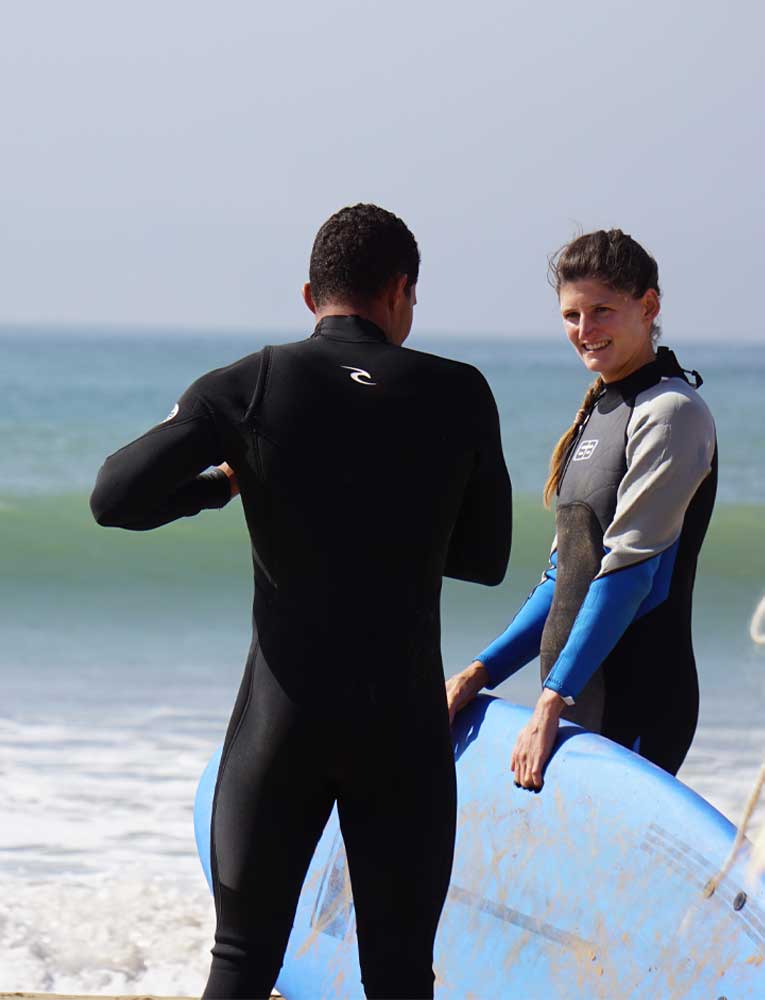
Morocco water temperature and wetsuit guide by month
The following figures represent typical conditions around the Agadir, Tamraght and Taghazout coastline. They are approximate seasonal ranges rather than guaranteed temperatures for a specific day.
| Month | Typical water temperature | Suggested wetsuit | What to expect |
|---|
| January | 17–18°C | 4/3 mm full suit; warm 3/2 mm for less cold-sensitive surfers | Cool water, colder mornings and possible wind chill |
| February | 16–17°C | 4/3 mm full suit; warm 3/2 mm for less cold-sensitive surfers | Usually the coldest period of the year |
| March | 17–18°C | 4/3 mm or warm 3/2 mm | Water remains cool, although daytime air temperatures begin rising |
| April | 17–18°C | 3/2 mm full suit; 4/3 mm if you feel the cold | Milder weather but still cool Atlantic water |
| May | 18–19°C | 3/2 mm full suit | Comfortable for most surfers in a well-fitting suit |
| June | 19–20°C | 3/2 mm full suit | Warm air can make the ocean feel colder on entry |
| July | 19–21°C | 3/2 mm or lighter suit for short sessions and warm surfers | Generally mild, although local upwelling can create cooler days |
| August | 20–22°C | 3/2 mm, 2/2 mm or shorty depending on tolerance | One of the warmest periods for the ocean |
| September | 20–22°C | 3/2 mm or lighter suit | Often the warmest and most comfortable water of the year |
| October | 19–21°C | 3/2 mm full suit | Pleasant water with increasingly consistent autumn surf |
| November | 18–20°C | 3/2 mm; 4/3 mm for longer sessions or cold-sensitive surfers | Cooling water and more frequent Atlantic swells |
| December | 17–19°C | 4/3 mm or warm 3/2 mm | Winter conditions return and wind can increase heat loss |
Historical records for Agadir and Taghazout show average monthly water temperatures of roughly 17–18°C in the coldest months and approximately 20–21°C around August and September. Individual years and short-term ocean conditions can produce warmer or cooler readings.
Is the ocean warm in Morocco?
The Atlantic coast of Morocco is mild rather than tropical.
During summer, the air temperature may feel hot while the ocean remains around 20°C. This contrast can surprise visitors who assume that sunny weather automatically means warm water.
Several factors influence how the ocean feels:
- Water temperature
- Air temperature
- Wind strength
- Cloud cover
- Time of day
- Length of the surf session
- How much you are paddling and moving
- The fit and condition of your wetsuit
A sunny afternoon with little wind can feel comfortable in a 3/2 mm wetsuit. The same water temperature may feel much colder during an early morning session with stronger wind.
This is why wetsuit recommendations should be treated as guidance rather than fixed rules.
Why Morocco’s Atlantic water stays relatively cool
Morocco faces the open Atlantic Ocean rather than a sheltered tropical sea. Coastal winds and ocean circulation can bring cooler subsurface water towards the coast, particularly during periods of upwelling.
As a result, the water near Tamraght and Taghazout does not always warm in the same way as the air.
You may also notice small differences between beaches on the same day. Water depth, current, wind direction and local geography can all influence the temperature you experience.
The monthly ranges in this guide are therefore more useful for packing than an exact promise about what the ocean will feel like during one particular session.
What wetsuit should you wear in Morocco?
For most surfers, the practical choice is between a 3/2 mm and a 4/3 mm full wetsuit.
The numbers refer to the thickness of the neoprene:
- The first number represents the thicker material around the torso.
- The second number represents the thinner material around the arms and legs.
A 4/3 mm suit provides more insulation than a 3/2 mm but can feel slightly heavier and less flexible.
General wetsuit guidance places 3/2 mm suits around the range commonly experienced in Morocco for much of the year, while 4/3 mm suits become useful at the colder end of that range. Personal cold tolerance and exposure to wind remain important.
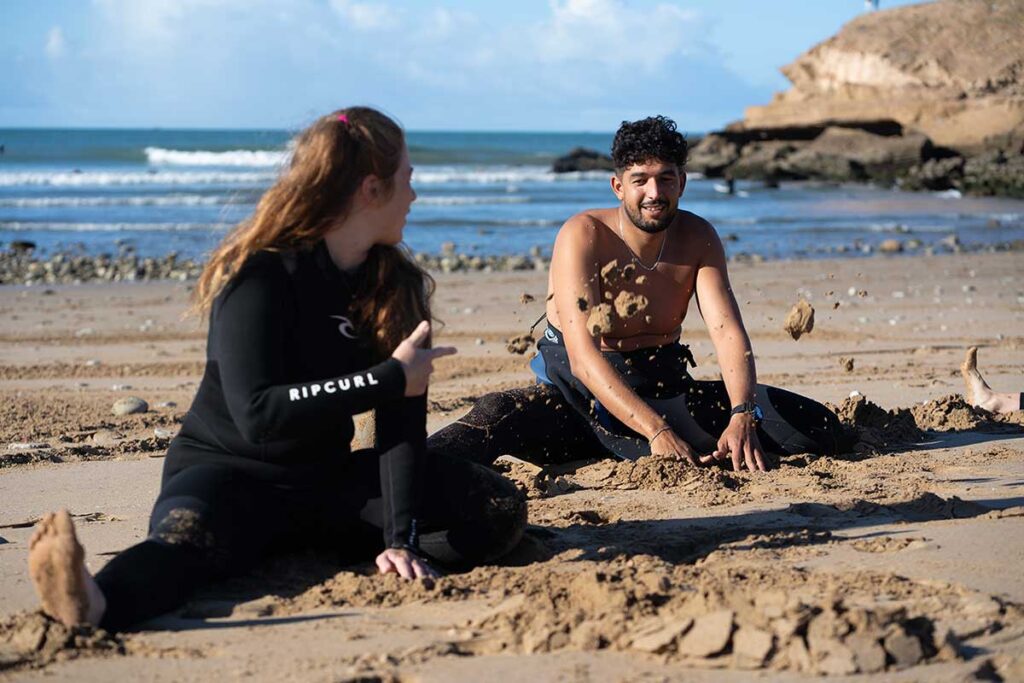
When to wear a 4/3 mm wetsuit
A 4/3 mm full wetsuit is generally the safer choice when:
- You are surfing between December and March
- The water is near the colder end of the seasonal range
- You feel the cold easily
- You are taking a long lesson
- The wind is strong
- You expect to spend significant time waiting in the water
- You are a complete beginner and will not be paddling continuously
A 4/3 mm does not mean that Morocco is extremely cold. It simply gives beginners and cold-sensitive surfers more comfort during the coolest months.
When to wear a 3/2 mm wetsuit
A 3/2 mm full suit is the most versatile option for Morocco.
It is commonly suitable:
- Through spring
- During summer
- Through much of autumn
- For active surfers during milder winter days
- For surfers who do not feel the cold easily
A good-quality, well-fitting 3/2 mm can feel warmer than an old or poorly fitting 4/3 mm.
When can you wear a shorty or 2/2 mm suit?
Some surfers may feel comfortable in a shorty or 2/2 mm suit during August or September, particularly during shorter sessions with warm air and little wind.
However, this is not automatically the best choice for beginners.
A beginner may spend more time:
- Standing still while listening to instructions
- Waiting for assistance
- Sitting or lying in the water
- Falling and restarting
- Surfing in the cooler morning period
For that reason, a 3/2 mm full suit is often more comfortable even during the warmer months.
Can you surf in swimwear or a rash guard?
Occasionally, warm conditions may allow very short sessions without a full wetsuit. However, swimwear or a rash guard alone should not be treated as the standard option for surfing near Tamraght and Taghazout.
A rash guard provides:
- Sun protection
- Reduced friction
- A small amount of wind protection
It does not provide the same thermal insulation as a wetsuit.
For most structured lessons, wearing a full wetsuit is the more comfortable and practical choice.
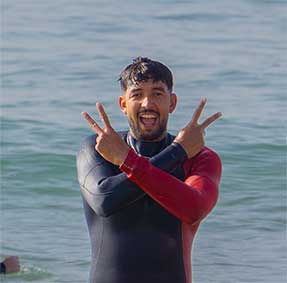
Morocco wetsuit guide by season
Winter: December to February
Winter brings the coolest water and Morocco’s largest, most consistent swells.
Typical water temperatures are approximately 16–18°C. A 4/3 mm full suit is generally the most comfortable choice, especially for beginners and longer sessions.
Experienced surfers who move continuously and tolerate cold well may use a warm, high-quality 3/2 mm on milder days. However, a 4/3 mm provides a safer margin when the wind is strong.
Winter air temperatures can feel pleasant in the sun, but early departures and windy beach conditions may make the session feel colder than the thermometer suggests.
Early Spring: March and April
Water temperatures usually remain around 17–18°C during March and April.
March can still feel like winter in the water, making a 4/3 mm comfortable for many surfers. By April, a 3/2 mm often becomes sufficient, although personal tolerance still matters.
Do not choose your suit based only on the warm afternoon air. The ocean warms more slowly than the land.
Late Spring: May
May is a transition month, with water commonly around 18–19°C.
A 3/2 mm full suit is suitable for most people. Cold-sensitive beginners may still appreciate a warmer suit during early morning sessions or windy days.
May can be a comfortable time for beginners because the weather is pleasant and the wetsuit requirement is relatively simple.
Summer: June to August
Water temperatures generally increase through summer, reaching approximately 20–22°C during the warmest periods.
A 3/2 mm full suit remains a dependable choice throughout summer. Some experienced or warm-blooded surfers may prefer a 2/2 mm suit, springsuit or shorty during August.
Summer is also associated with coastal upwelling, which means the water can occasionally feel cooler than expected despite hot weather.
Beginners should prioritise comfort over wearing the thinnest possible suit.
Early Autumn: September and October
September is often one of the warmest months for surfing near Agadir, Tamraght and Taghazout.
Water temperatures may reach approximately 20–22°C, making a 3/2 mm full suit comfortable for most surfers. Some people may use a lighter suit in September.
By October, the water begins cooling gradually, but a 3/2 mm is still generally appropriate.
For a complete overview of waves and seasonal conditions, read our month-by-month guide to the best time to surf in Morocco.
Late Autumn: November
November water temperatures are generally around 18–20°C.
A 3/2 mm remains suitable for many surfers, but the return of larger swells, cooler mornings and stronger wind can make a 4/3 mm more comfortable.
If you are unsure, choosing the warmer option is unlikely to negatively affect a beginner session.
Why beginners often need a warmer wetsuit
Two surfers in the same water may need different wetsuits.
An experienced surfer often:
- Paddles continuously
- Generates more body heat
- Spends less time standing still
- Enters and exits the water efficiently
- Understands when cold is affecting performance
A beginner may:
- Wait while receiving instructions
- Spend more time stationary in shallow water
- Move less efficiently
- Take longer to return to the board after falling
- Remain in the water for a full lesson despite beginning to feel cold
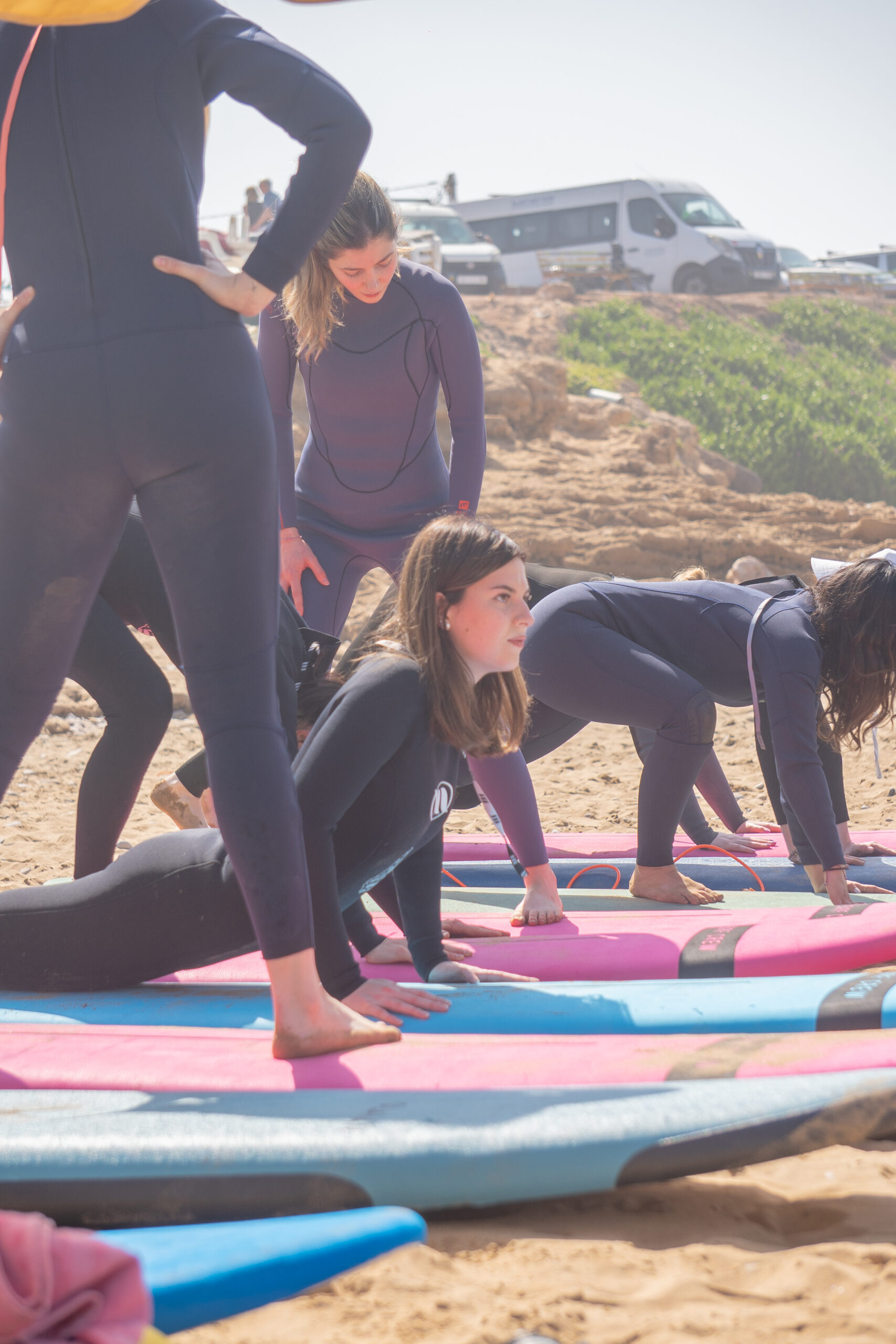
Feeling cold can make it harder to concentrate, paddle and practise the pop-up. It can also make the experience less enjoyable.
For beginners, choosing a slightly warmer wetsuit is usually better than becoming cold halfway through the lesson.
For more information about the first session, read our guide to what to expect during your first surf lesson.
Does wetsuit fit matter?
Fit is as important as thickness.
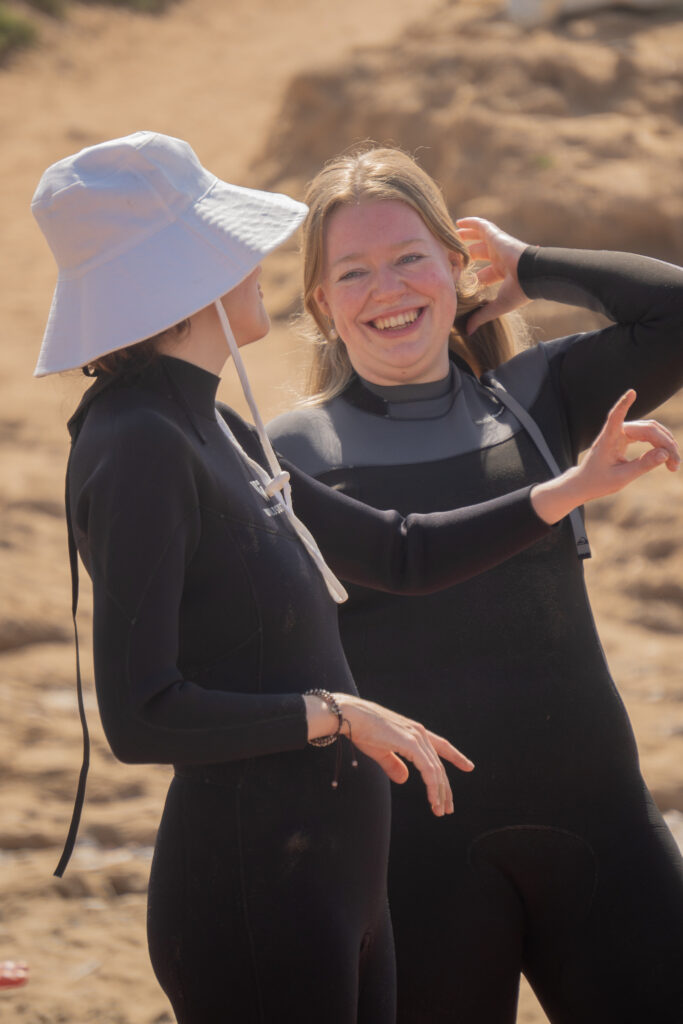
A wetsuit works by allowing a thin layer of water inside and warming it with body heat. If the suit is too loose, fresh cold water repeatedly enters through the neck, arms or legs.
A well-fitting wetsuit should:
- Sit closely against the body
- Have no large folds around the torso or lower back
- Fit firmly around the neck, wrists and ankles
- Allow you to move your shoulders
- Allow comfortable breathing
- Avoid excessive pressure around the neck
A loose 4/3 mm can feel colder than a well-fitting 3/2 mm.
Beginners using rental equipment should ask for another size if the suit has large gaps, restricts movement or allows significant water flushing.
Do you need surf boots in Morocco?
Surf boots are not normally required for warmth around Tamraght and Taghazout.
The water is generally warmer than the temperatures at which thick boots, gloves and hoods become standard thermal equipment.
Boots may still be useful when:
- Entering over rocks
- Surfing reef breaks
- Protecting an existing foot injury
- You have particularly cold feet
- An instructor recommends them for a specific location
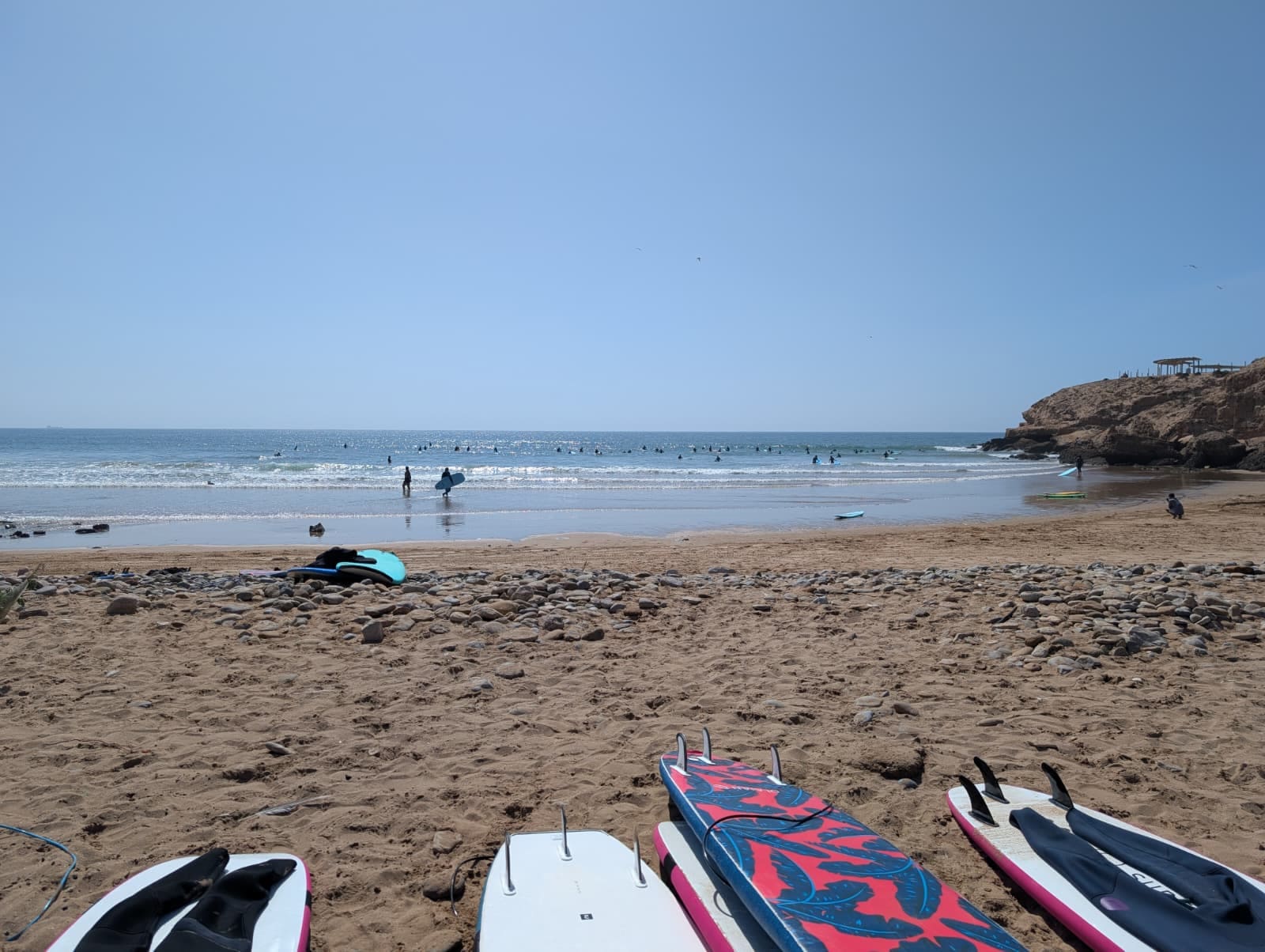
Complete beginners are commonly taken to sandy beach breaks, where boots are usually unnecessary.
Do not walk barefoot over unfamiliar rocks or reefs simply because the water feels warm enough.
Do you need gloves or a hood?
Gloves and hoods are not normally needed for typical surfing conditions near Tamraght.
They may be relevant for someone with exceptional sensitivity to cold, but they are not standard equipment for most local surf sessions.
A full wetsuit with a good fit is usually sufficient.
Should you bring your own wetsuit to Morocco?
Bringing your own wetsuit can be worthwhile when:
- You surf regularly
- You know your exact size
- You have a suit that fits particularly well
- You have unusual sizing requirements
- You are sensitive to cold
- You prefer not to use rental equipment
Using the camp’s equipment may be easier when:
- You are a complete beginner
- You do not own a wetsuit
- You are unsure which thickness to choose
- You want to travel with less luggage
- Equipment is included in your package
Before travelling, ask your accommodation:
- Whether wetsuits are included
- Which thicknesses are available
- Whether there is a wide size range
- Whether equipment is included every surf day
- Whether replacement equipment is available when the fit is unsuitable
For a complete preparation checklist, read what to pack for a surf and yoga camp in Morocco.
What The Happy Surfers provides
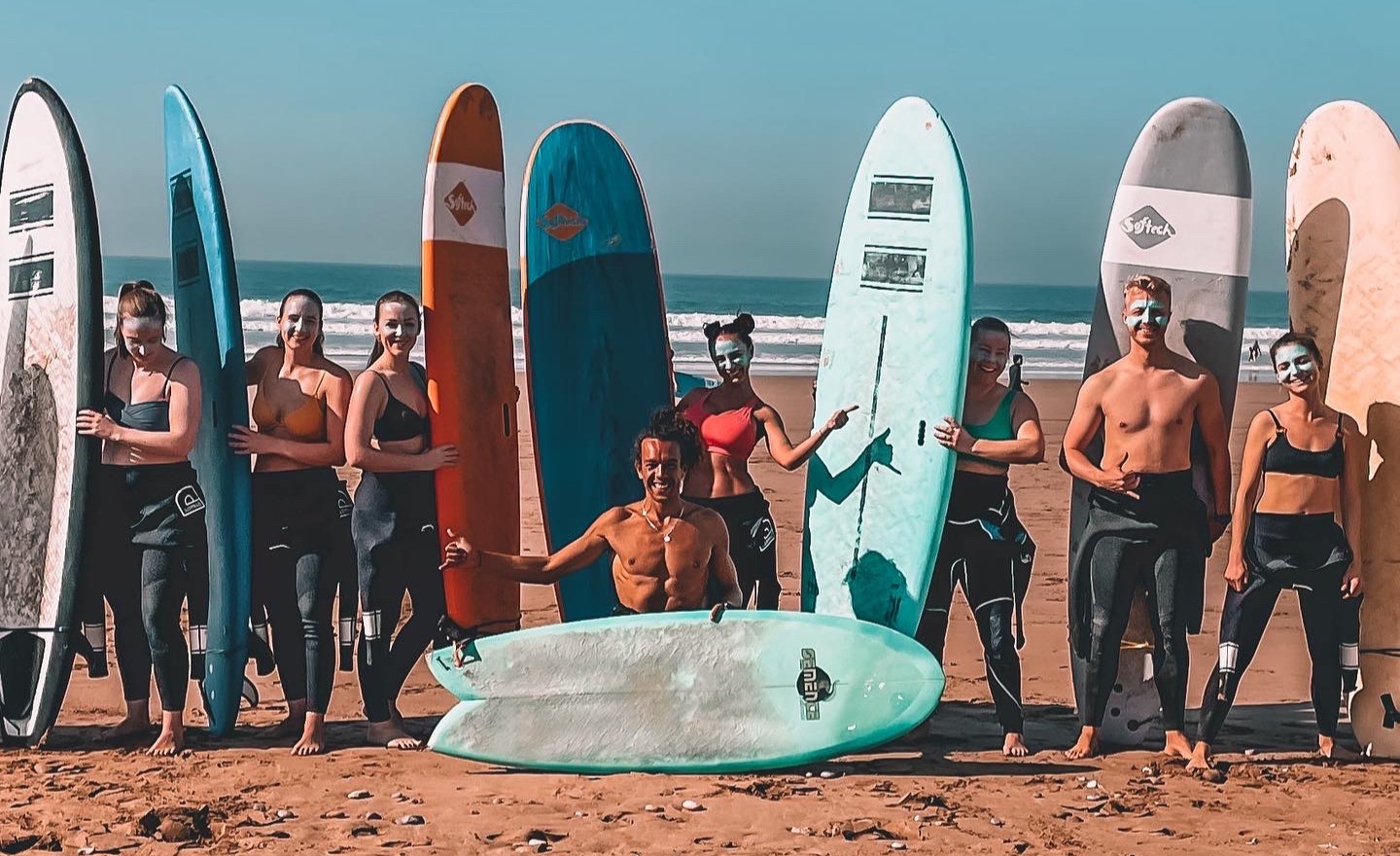
Guests staying at The Happy Surfers do not need to purchase or transport their own wetsuit.
Our all-inclusive surf packages include:
- Wetsuits
- Surfboards
- Surf equipment
- Five coached surf sessions during a standard week
- Five additional free-surf opportunities
- Daily transport to the surf spot selected for the conditions
- Help choosing equipment suited to your size and level
The team can help you select a wetsuit that fits properly and is appropriate for the season. If the first suit does not feel right, tell the instructor before entering the water so the sizing can be adjusted.
Explore our all-inclusive surf packages in Tamraght to see the full program, room options and included equipment.
Frequently Asked Questions about wetsuits in Morocco
Do you need a wetsuit to surf in Morocco?
Yes, most surfers wear a wetsuit throughout the year on Morocco’s Atlantic coast. The water is mild but generally cool enough that a wetsuit makes longer sessions more comfortable.
Is a 3/2 mm wetsuit enough for Morocco?
A 3/2 mm wetsuit is suitable for much of the year. During the coldest winter period, cold-sensitive surfers and beginners may be more comfortable in a 4/3 mm suit.
Do I need a 4/3 mm wetsuit in Taghazout?
A 4/3 mm is useful from approximately December to March, particularly during windy days, early sessions or longer surfs. Some experienced surfers may still use a warm 3/2 mm.
What is the warmest month for surfing in Morocco?
The ocean around Agadir and Taghazout is generally warmest around August and September, when typical water temperatures may reach approximately 20–22°C.
What is the coldest month for surfing in Morocco?
February is commonly the coldest period, with water around approximately 16–17°C near the Agadir and Taghazout coastline.
Do beginners need a thicker wetsuit?
Beginners may benefit from a warmer suit because they often move less continuously and spend more time waiting for instructions. A 4/3 mm may therefore be comfortable during winter even when an experienced surfer chooses a 3/2 mm.
Are wetsuits provided at Moroccan surf camps?
Many organised surf camps provide wetsuits, but inclusions vary. Confirm the available sizes, suit thicknesses and whether equipment is included in the package before booking.
Do I need surf boots in Morocco?
Usually not for warmth. Boots may be useful at rocky or reef breaks, but beginners surfing sandy beaches generally do not need them.
Final Thoughts: Which wetsuit should you wear in Morocco?
For most surf trips near Tamraght and Taghazout, the choice is relatively simple:
- Choose a 4/3 mm full suit during the coldest winter months if you feel the cold easily.
- Choose a 3/2 mm full suit for most of spring, summer and autumn.
- Consider a lighter suit only during the warmest weeks and when your cold tolerance, session length and conditions allow it.
Water temperature is only part of the decision. A well-fitting wetsuit, wind conditions and the amount of time you spend moving can make an equally important difference.
Beginners do not need to buy specialist equipment before their trip when their surf camp provides suitable boards and wetsuits.
At The Happy Surfers, your equipment and daily surf transport are included, allowing you to focus on learning and enjoying the ocean rather than deciding what gear to purchase.
Explore our surf and yoga packages in Morocco and start planning your stay in Tamraght.

0 Comments