


Starting surfing for beginners can feel both exciting and intimidating. If you’re about to learn to surf, beginners often ask the same questions: Will I be able to stand up? Is it harder than it looks? What actually happens during a first surf lesson?
When you take your first surf lesson, it's important to set realistic expectations and embrace the learning process.
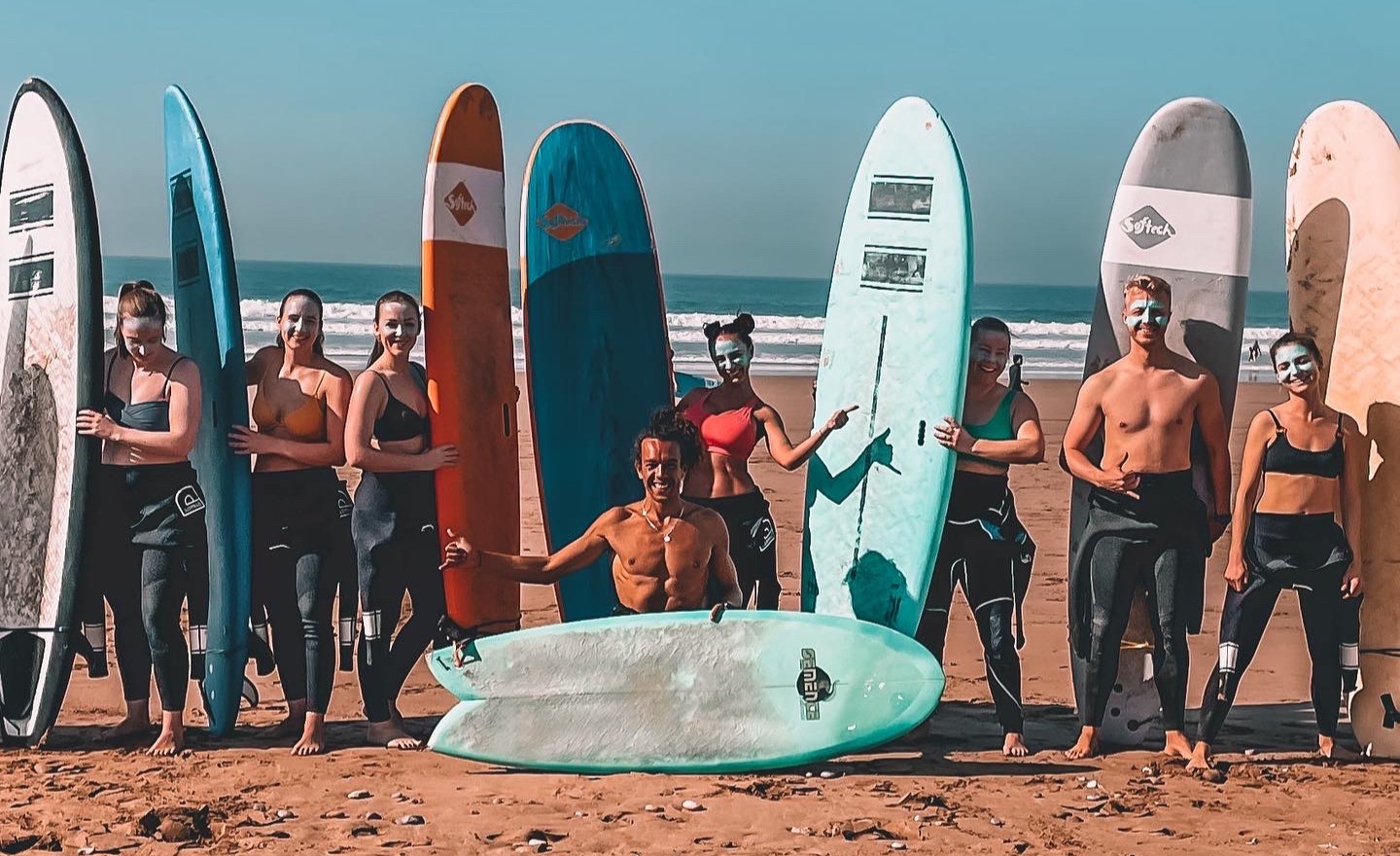
The truth is that your first surf lesson is not about performance, it’s about discovery. It’s about getting comfortable in the ocean, understanding your board, and experiencing your very first wave. With the right expectations and a few beginner surf tips, that first session often becomes one of the most memorable moments of your trip.
This guide will walk you through exactly what to expect, step by step, so you can arrive feeling prepared, calm, and excited.
Is surf hard for beginners?
One of the biggest concerns people have is whether surfing is too difficult. So, is surf hard for beginners?
It can feel challenging at first, but not in the way most people expect. The difficulty doesn’t come from strength or talent, but from coordination and timing. You’re learning to move with the ocean, not against it.
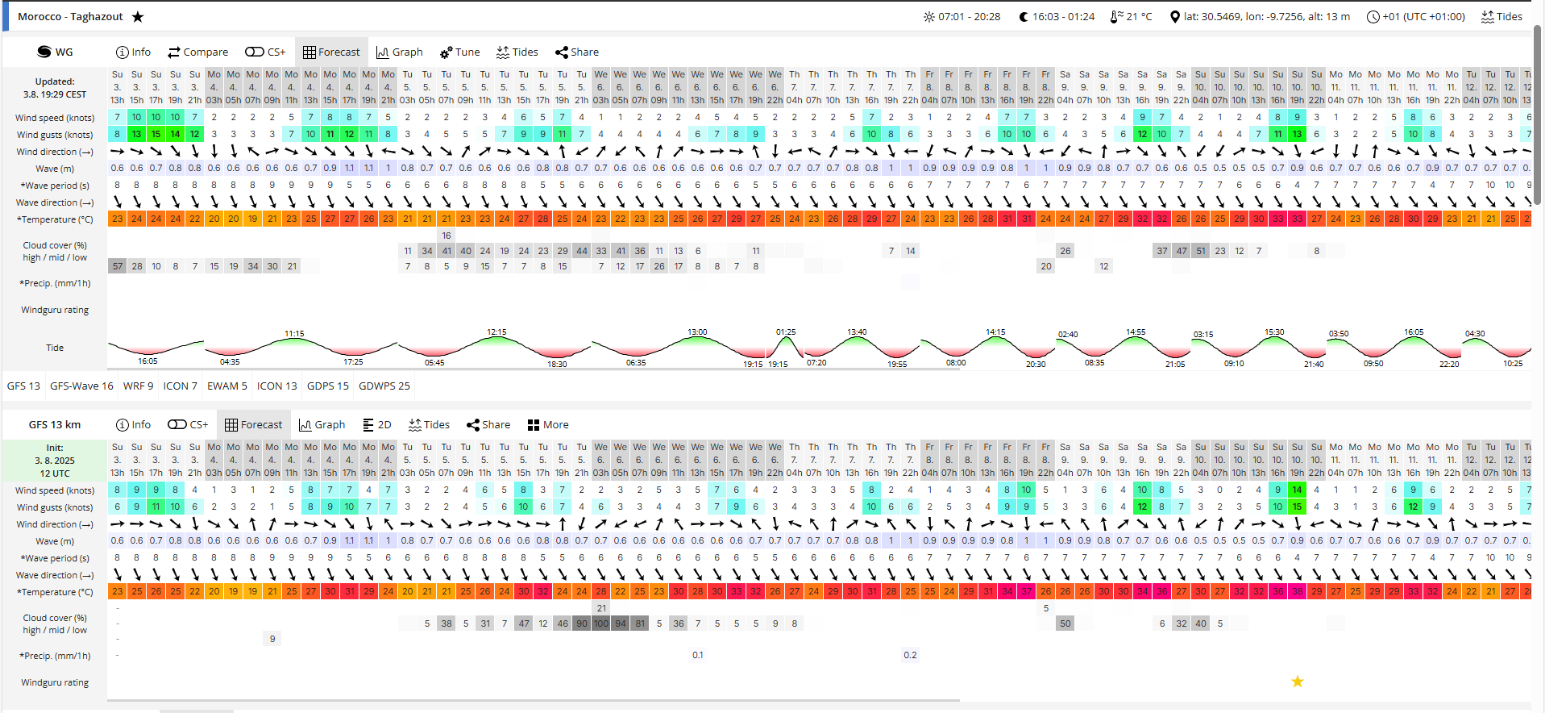
The good news is that beginner surf conditions are specifically chosen to make things easier. You’ll be in shallow water, on a large stable board, catching small waves designed for learning.
Most beginners surprise themselves by standing up during their very first session, even if just for a few seconds.
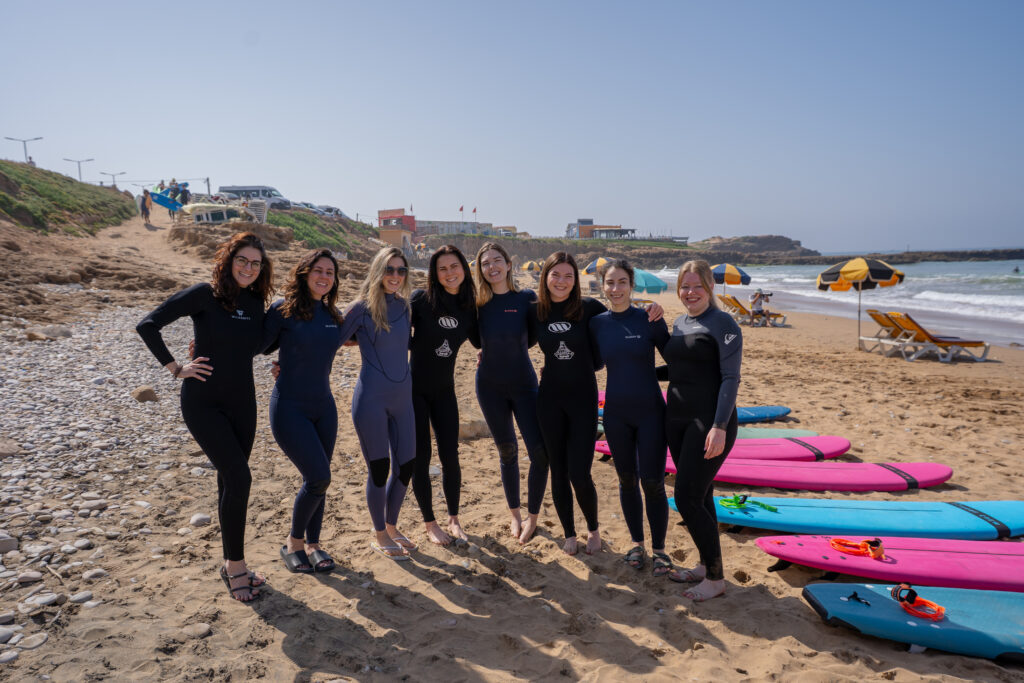
What happens during a first surf lesson?
If you’re wondering what happens in a beginner surf lesson, it usually follows a simple and structured flow designed to build confidence step by step.
A typical beginner surf experience includes:
- Introduction and safety briefing
- Practice on the beach
- First attempts in the water
- Guided wave riding with your instructor
Your instructor will stay close, helping you position yourself, choose waves, and improve your timing.
The goal is not to surf independently right away, but to understand the basics and feel comfortable in the environment.
Before you enter the water: Basics you’ll learn
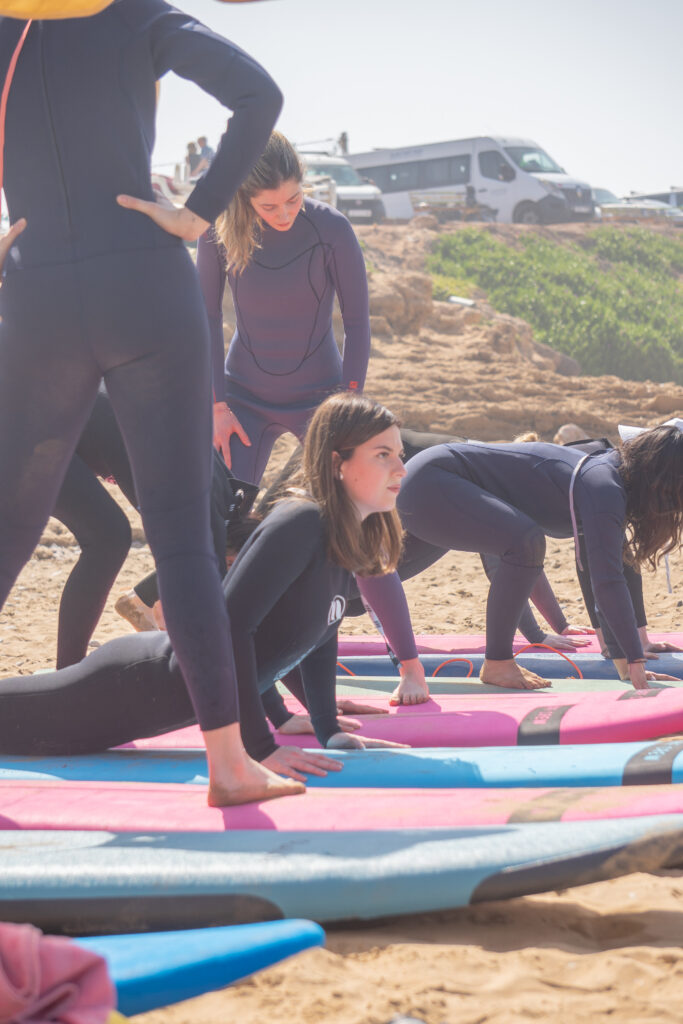
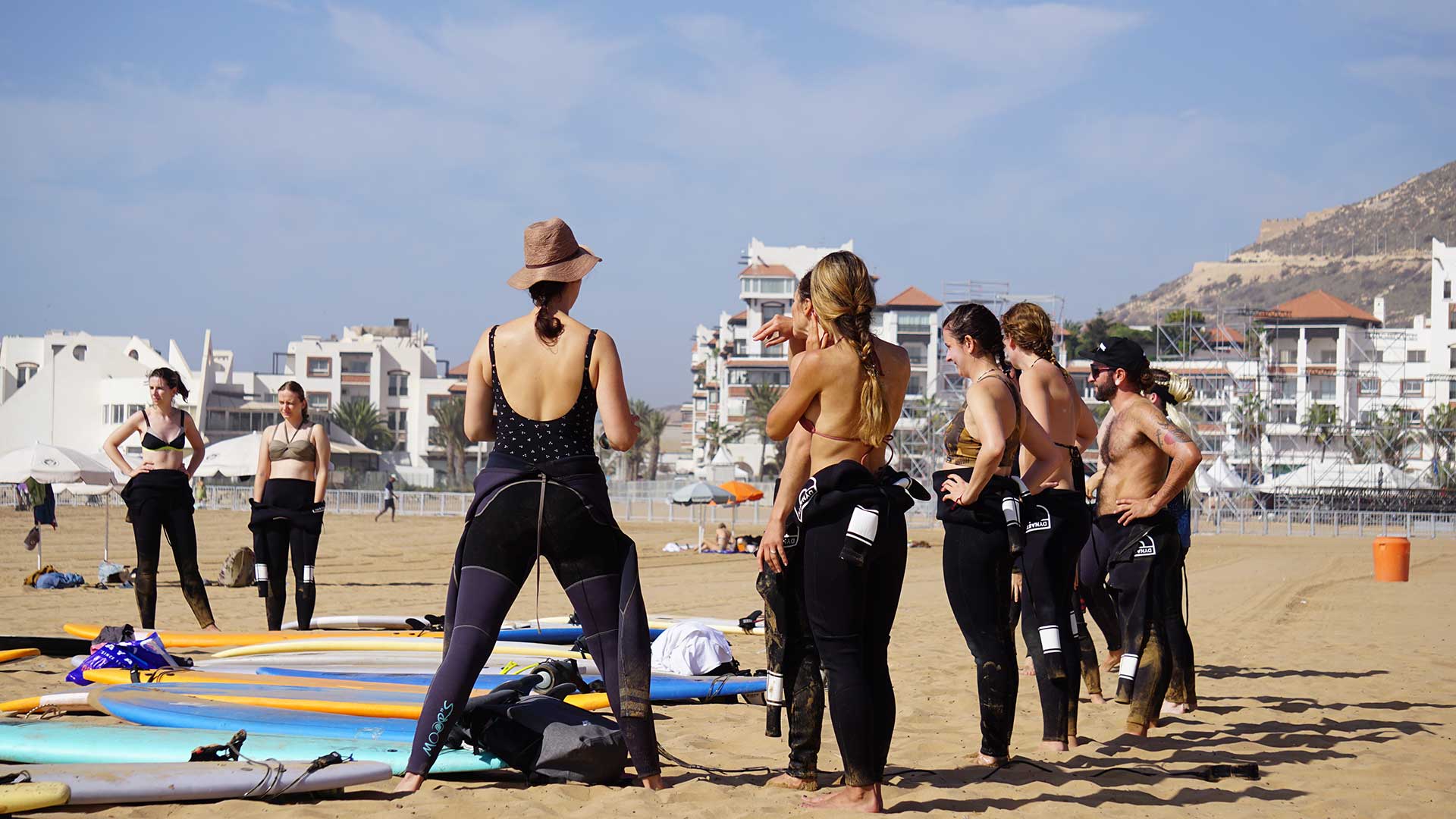
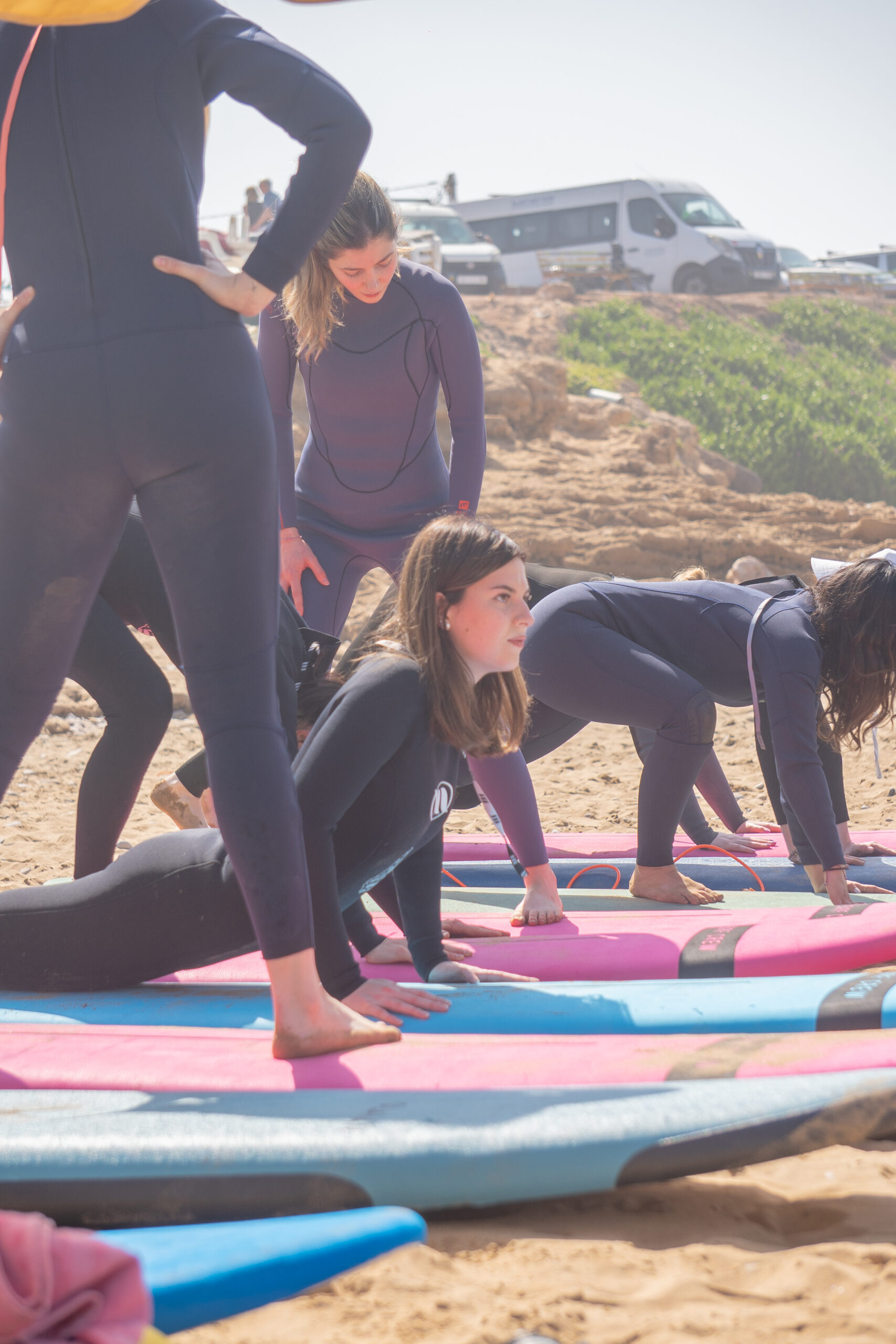
Before getting into the ocean, you’ll spend time on the beach learning key fundamentals.
These include:
- Paddling basics surfing requires: how to lie on the board and move efficiently
- Standing up on a surfboard: practicing the “pop-up” movement
- Surf safety beginners need to know: understanding where to stand, how to fall, and how to respect the ocean
This part is often underestimated, but it’s essential. It allows your body to understand the movement before adding the challenge of waves.
Think of it as building muscle memory in a calm environment.
Your first waves: what it really feels like
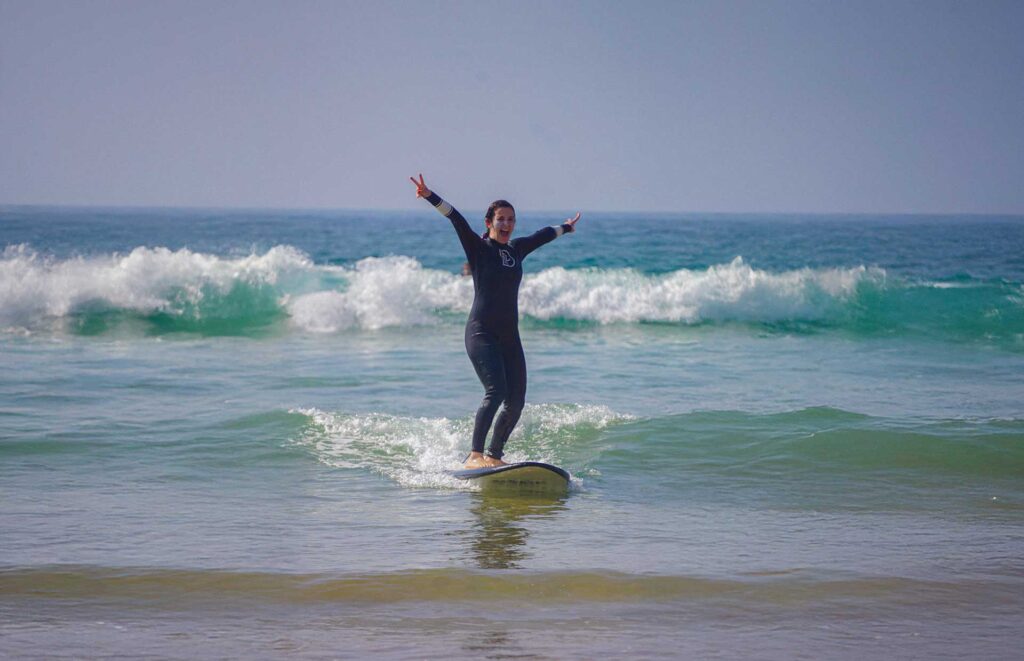
The first time you catch a wave is something you won’t forget.
At first, it may feel chaotic. You’ll paddle, try to stand, fall, laugh, and repeat. But then, at some point, everything aligns - your timing, your balance, the wave - and you glide forward.
Even if it lasts only a few seconds, that moment changes everything.
This is the real beginner surf experience. It’s not about perfection, but about connection, with the ocean, your body, and something new.
Common fears beginner surfers experience
It’s completely normal to feel nervous before your first session. Most surfing fears beginners experience are shared by nearly everyone.
Common concerns include:
- Fear of falling
- Fear of waves
- Fear of not being strong enough
- Fear of looking inexperienced
The reality is reassuring:
- You will fall, and it’s safe in beginner conditions
- Waves are small and manageable
- Strength matters less than technique
- Everyone around you started as a beginner
The fear of waves beginner surfers feel often disappears quickly once they realize how controlled and supportive the environment is.
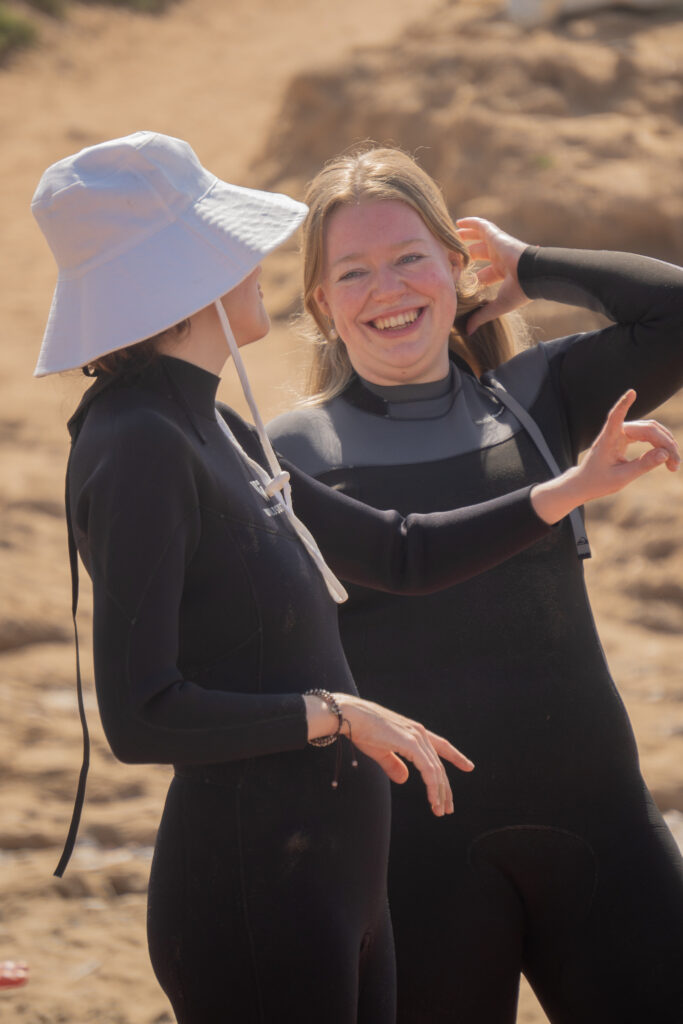
Beginner surf tips to make progress faster
While progress takes time, a few beginner surf tips can help you improve more efficiently.
1. Stay relaxed
Tension makes everything harder. Breathing and staying calm improves balance and reaction.
2. Look forward, not down
Your body follows your gaze. Looking forward helps maintain stability.
3. Accept falling as part of learning
Every fall is part of the process, not a failure.
4. Listen to your instructor
Small adjustments in timing or position can make a big difference.
5. Focus on one thing at a time
Instead of trying to do everything perfectly, improve one element per session.
Avoiding common beginner mistakes surfing often comes down to patience rather than effort.
How long it takes to stand up on your board
A question that naturally comes up is how long does it take to learn surfing, or more specifically, how long it takes to stand up.
Most beginners manage to stand up during their first surf lesson, especially with guidance. However, consistency takes longer.
Standing up once is just the beginning. Repeating it, improving balance, and riding waves independently takes multiple sessions.
The key is understanding that early success is about experience, not mastery.
Why yoga and ftness help beginner surfers
You don’t need to be extremely fit to start surfing, but surf fitness for beginners can make the experience easier.
Surfing uses:
- Core strength for balance
- Upper body strength for paddling
- Flexibility for movement
This is where yoga for beginner surfers becomes especially useful. Yoga improves balance, mobility, and breathing, all of which directly support surfing.
It also helps with recovery after sessions, reducing soreness and fatigue. Even light preparation can make your first surf lesson more enjoyable.
What you’ll feel after your first surf session
After your first surf lesson, you’ll likely feel a mix of emotions.
Physically, you may feel tired, paddling uses muscles you don’t use often. But mentally, you’ll feel energized, proud, and often surprised by what you achieved.
Many beginners describe a sense of clarity and calm after being in the ocean. Others feel motivated to go back in immediately.
More than anything, you’ll feel a shift in perspective. Surfing stops being something you watch, and becomes something you experience.

The real goal of your first surf lesson
Your first surf lesson is not about becoming a surfer in one day.
It’s about:
- Building confidence in the ocean
- Understanding the basics of movement and timing
- Experiencing your first wave
- Discovering a new way to connect with nature
For many, that first session is the beginning of something much bigger.
So if you’re feeling unsure, remember this: you don’t need to be ready. You just need to show up, be open, and enjoy the process.
Because the moment you catch your first wave, even for a few seconds, you’ll understand why so many people fall in love with surfing.
If you’re ready to experience your first waves in a supportive and beginner-friendly environment, you can explore our surf experiences and take that first step into the ocean.






0 Comments