


Most beginners can stand up on a surfboard during their first lesson, catch broken waves more consistently after three to five sessions, and begin surfing small waves with greater independence after roughly 10 to 20 well-structured sessions. Becoming comfortable with wave selection, paddling and changing conditions usually takes several months of regular practice. So how long does it take to learn surfing?
The exact timeline depends on your fitness, confidence in the ocean, lesson frequency, surf conditions and the quality of your instruction. Progress is rarely perfectly linear, but most beginners experience meaningful improvements much sooner than they expect.
This guide explains the typical beginner surfing timeline, what you may learn during each stage and how to progress more efficiently without putting unnecessary pressure on yourself.
How long long does it take to learn surfing?
Every beginner progresses differently, but the following timeline shows what many people can realistically expect with regular lessons and suitable conditions.
| Surfing experience | Typical progress | What is still normal |
|---|---|---|
| First lesson | Learn basic ocean safety, board positioning, paddling and the pop-up. Many beginners stand up on an assisted broken wave at least once. | Falling frequently, looking down, standing too early or too late, and needing help to catch waves. |
| 2–3 sessions | Become more comfortable in the water, improve the pop-up and begin catching broken waves with less assistance. | Inconsistent balance, tired shoulders and difficulty timing the take-off. |
| 4–5 sessions | Catch broken waves more consistently, control the board better and start making small changes of direction. | Missing waves, losing balance after standing and depending on instructor feedback. |
| 6–10 sessions | Improve paddling, timing and wave selection. Some beginners may begin trying small unbroken waves with close guidance. | Hesitation in deeper water and difficulty reading which waves are suitable. |
| 10–20 sessions | Start catching suitable waves more independently, understand basic surf etiquette and ride with better balance and control. | Inconsistency between sessions, especially when the swell, wind or tide changes. |
| Several months of regular practice | Develop stronger paddling, better wave reading and greater confidence in a wider range of beginner-friendly conditions. | Continuing to make mistakes and needing time to adapt to unfamiliar beaches and waves. |
These milestones are not a test. A beginner who needs more time is not failing, and a person who stands up during the first lesson has not yet mastered surfing. Real progress means becoming safer, calmer and increasingly independent in the ocean.
Progress is usually faster when lessons are taken close together. Each session reinforces the paddling, timing and positioning learned the day before, while regular instructor feedback prevents small mistakes from becoming habits.
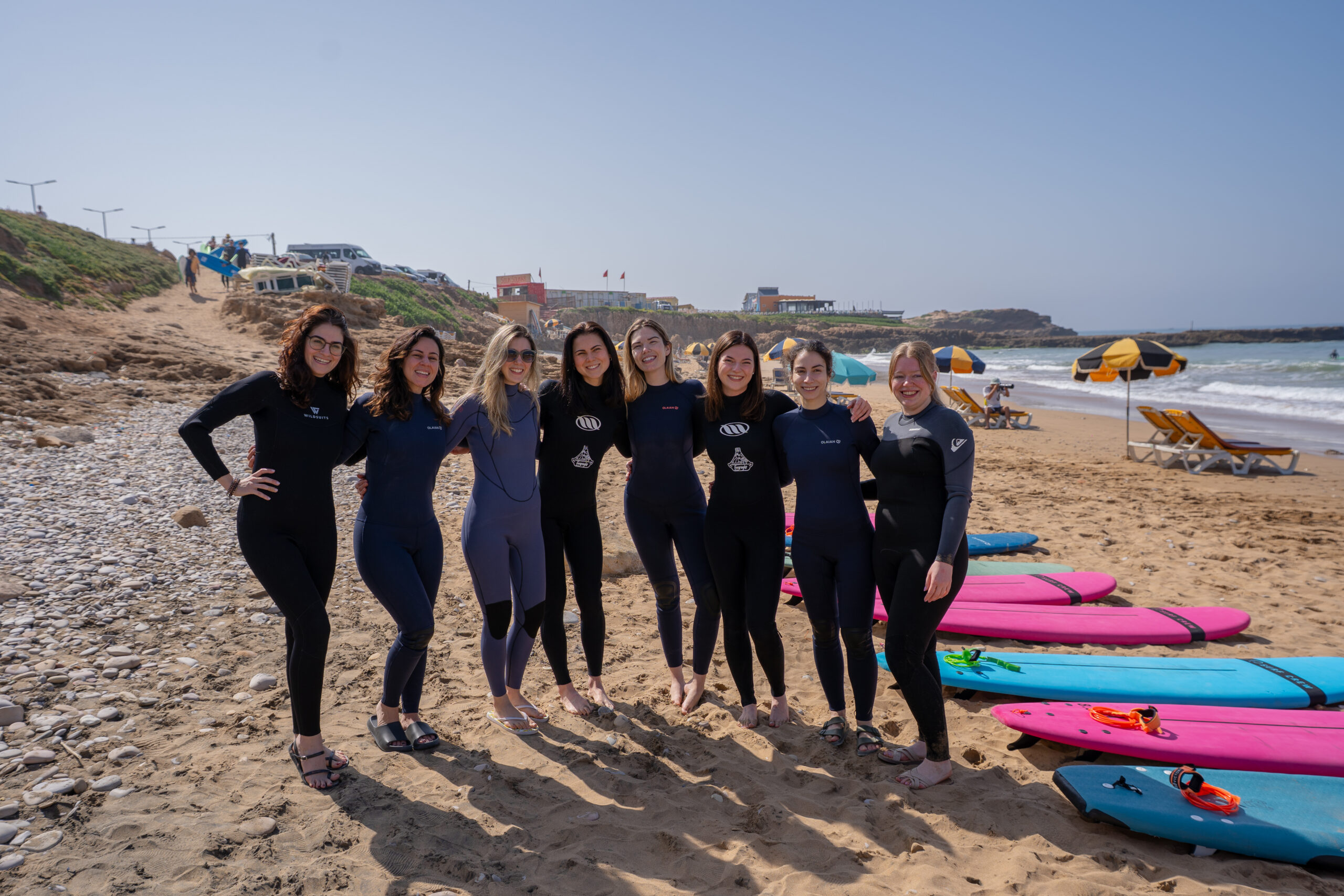
Our all-inclusive surf packages in Tamraght combine structured coaching, equipment and daily transport to the surf spot best suited to your level and the conditions. A full week gives beginners time to practise consistently, receive feedback and build confidence without having to organise each session separately.
From our experience welcoming beginner surfers in Tamraght, progress often becomes more noticeable after several consecutive sessions. Guests begin to recognise suitable waves, paddle with better timing and feel less overwhelmed by changing ocean conditions.
Is surfing hard for beginners?
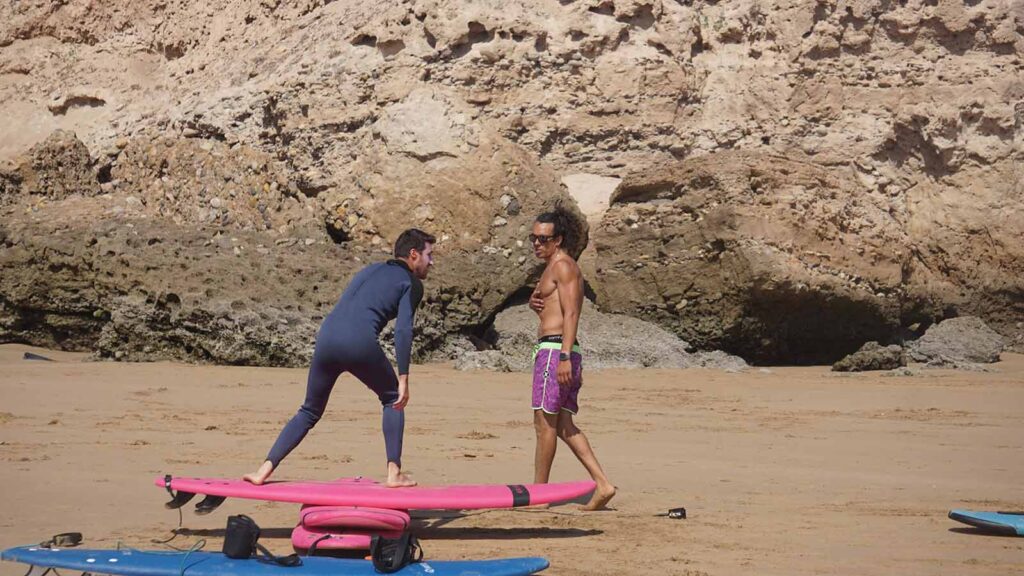
Surfing can feel challenging at first, but it is not impossible. The perception that surfing is hard for beginners often comes from watching experienced surfers perform advanced maneuvers. In reality, beginner surfing focuses on simple foundations: paddling, balance, and standing up on a surfboard.
The ocean adds an unpredictable element that makes surfing different from other sports. Waves change constantly, which means no two attempts are exactly the same. However, this is also what makes surfing so rewarding. Each small improvement feels meaningful because it happens in a natural environment rather than a controlled one.
Most beginners discover that once they catch their first wave, the initial intimidation disappears. The experience builds confidence in the water and encourages continued learning.
What happens during your first surf lesson
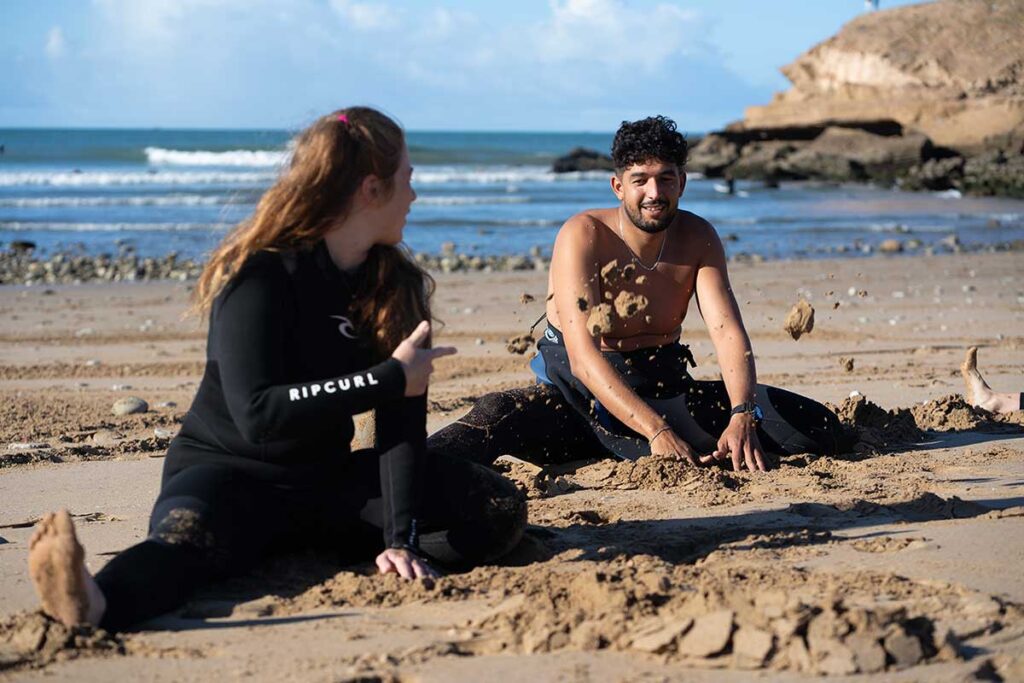
A first surf lesson is designed to introduce the basics of surfing in a safe and structured way. Before entering the water, instructors usually explain important fundamentals such as ocean safety, wave awareness, and paddling technique for beginners.
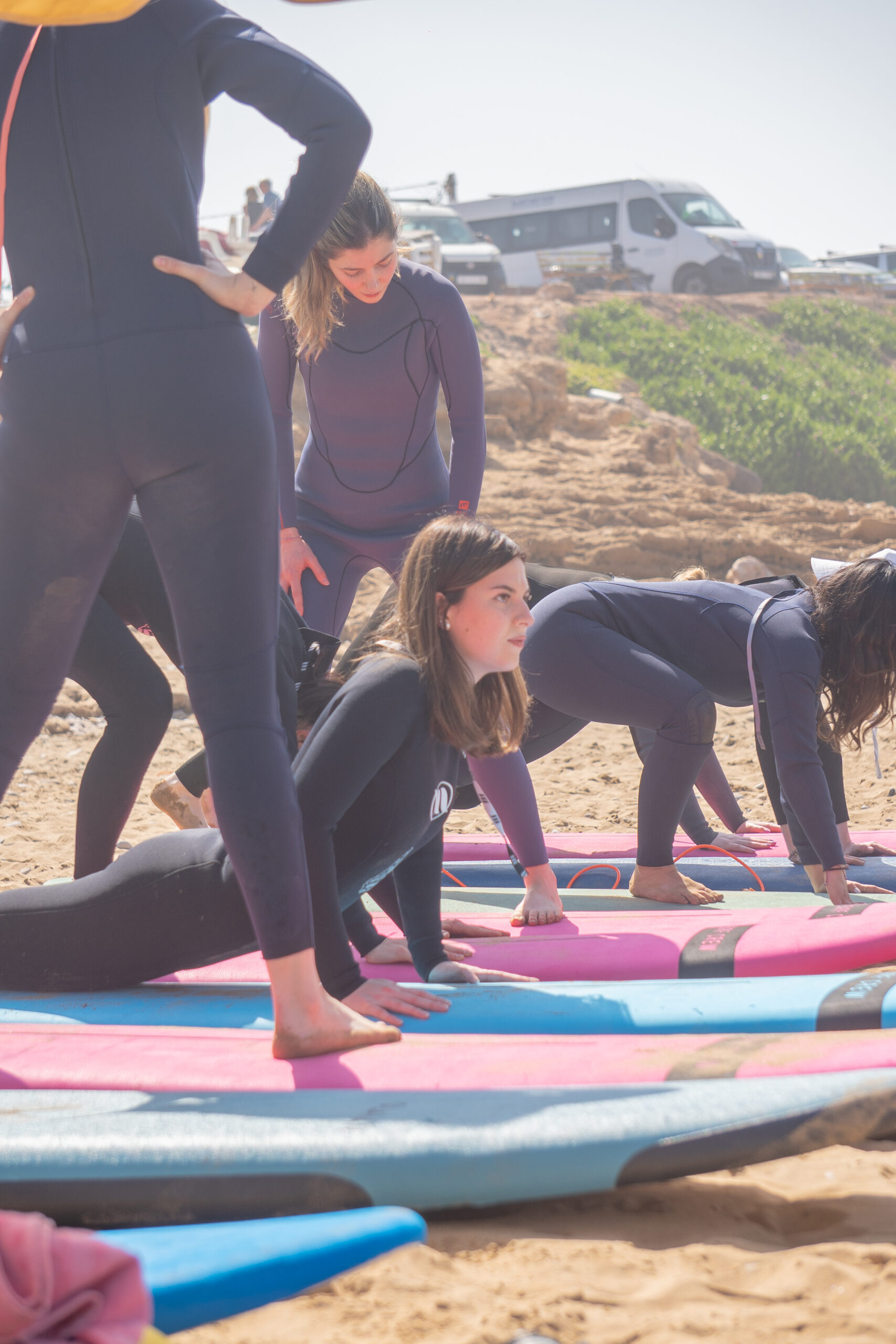
On the beach, you will practice the “pop-up,” which is the movement used to stand up on a surfboard. Once in the water, instructors guide beginners toward gentle waves and help them catch their first rides. Most beginners are surprised to find that they can stand up during their very first session, even if only for a few seconds.
These early successes are an important part of building confidence in the water, which is one of the most important aspects of beginner surfing progression.
For a complete breakdown of beach preparation, safety, equipment and your first time in the water, read our guide to what to expect during your first surf lesson.
The typical beginner surf progression
Learning to surf follows a natural progression that most beginners experience.
First comes learning the paddling technique needed by beginners to move through the water efficiently. Paddling may seem simple, but it requires coordination, endurance, and proper positioning on the board.
Next comes standing up on a surfboard. This stage often includes many attempts before achieving consistent success.
Once beginners can stand up reliably, they start understanding timing, when to paddle, which waves to catch, and how to ride them smoothly.
As confidence grows, surfers begin making small directional adjustments and reading the ocean more effectively.
This gradual beginner surfing progression is what transforms early struggles into meaningful progress.
Common fears beginner surfers have
Many people interested in surfing share similar concerns. These common fears among beginner surfers are completely normal.
Some worry about their fitness level. Others fear falling or feel uncertain about the ocean environment. The truth is that beginners spend most of their early sessions in shallow water with soft waves. Falling off a surfboard is part of the process, but it usually happens in a controlled and safe way.
Another common fear is embarrassment or feeling inexperienced. In reality, surf communities are often welcoming, and many people in the water are also learning.
Once beginners experience the supportive atmosphere and realize everyone starts somewhere, these fears tend to disappear.

Beginner surf tips to improve faster
Progress in surfing comes from consistency and patience. However, several beginner surf tips can accelerate improvement.
First, surf regularly if possible. Frequent exposure to waves helps your body remember movements and improves timing.
Second, choose the right equipment. Larger boards provide more stability and make it easier to catch waves.
Third, take structured lessons during the early stages. Instructors can identify common beginner surf mistakes and correct them quickly.
Finally, focus on enjoyment rather than perfection. Surfing is not about immediate mastery but about building comfort in the ocean over time.
Why yoga helps beginner surfers
Many surfers complement their training with yoga for beginner surfers. Yoga supports surfing in several important ways.
Balance and flexibility improve, which helps when standing up and maintaining control on the board. Breathing techniques also increase calmness and focus, especially in unfamiliar ocean conditions.
Yoga can also reduce muscle soreness after surf sessions and improve body awareness. For beginners, this combination helps develop the physical and mental readiness required for surfing.
Over time, yoga naturally supports surf progression by strengthening the body while promoting relaxation and patience. This is why our surf and yoga packages combine regular surf coaching with yoga sessions designed to support mobility, balance, recovery and body awareness.

Surf fitness: preparing your body for the ocean
Although surfing does not require elite athletic ability, basic surf fitness can make the learning process easier and more enjoyable.
Paddling requires endurance in the shoulders and back, while balance depends on strong core muscles. Exercises that improve balance and the core strength required for surfing, such as planks, swimming, and mobility work, can accelerate progress. Cardiovascular fitness also helps beginners paddle longer and recover faster between waves.
Even simple preparation can make the first surf sessions feel more comfortable and enjoyable.
How to stay motivated while learning to surf?
The most important mindset for beginner surfers is patience. Progress rarely happens in a straight line. Some sessions feel amazing, while others may feel challenging.
Staying motivated means celebrating small victories. Catching one wave, paddling more efficiently, or feeling calmer in the ocean are all meaningful achievements.
Surfing is unique because it combines sport, nature, and personal growth. Over time, many beginners realize that the joy of surfing comes not only from riding waves but from the journey of learning itself.
For those willing to embrace the process, learning to surf becomes less about how quickly you improve and more about enjoying every moment in the water.

The real answer to “How long does it take to learn surfing?”
So how long does it take to learn surfing? In truth, the first taste of surfing can happen within a single session. Standing up on a board, feeling the energy of a wave, and experiencing that brief glide toward the shore is often enough to understand why people fall in love with the sport.
From there, the journey continues. Confidence grows, technique improves, and each session brings new discoveries.
For beginners, the most important step is simply starting. Once you take your first surf lesson and experience the rhythm of the ocean, the timeline becomes less important than the adventure itself.






0 Comments