

Traveling to Morocco for the first time is easier when you know what to expect. The country is welcoming and well established for tourism, but cash is still important, taxi systems vary between cities, cultural norms may feel unfamiliar, and busy medinas can be overwhelming during the first few hours.
Before arriving, organise your airport transfer or understand the local taxi options, download an offline map, check that your phone is unlocked, carry some Moroccan dirhams and save the full address of your accommodation. Dress comfortably and respectfully in towns, remain polite but firm with persistent sellers, and confirm prices before accepting informal services.
This practical guide covers the essential information first-time visitors need, including money, SIM cards, transport, clothing, safety, cultural etiquette and what to expect when arriving in Morocco.
Morocco first-time travel essentials
| Topic | What first-time visitors should know |
|---|---|
| Money | The Moroccan dirham is the local currency. Cards are increasingly accepted, but cash remains important for taxis, small restaurants, markets and local shops. |
| Mobile data | Local SIM cards and eSIM options are available. Check that your phone is unlocked before travelling and keep your passport available when registering a local SIM. |
| Airport arrival | Save your accommodation address, download an offline map and confirm your transfer or taxi arrangements before landing. |
| Transport | Use official taxis or prearranged transfers. Confirm the price before starting when a meter is not being used. |
| Clothing | Lightweight, modest clothing is suitable for most towns. Beach and surf areas are more relaxed, but swimwear should generally remain at the beach or accommodation. |
| Language | Arabic and Amazigh are Morocco’s official languages. French is widely used, and English is increasingly common in tourist areas. |
| Safety | Stay aware of your surroundings, protect valuables in busy areas and avoid isolated places late at night. |
| Cultural etiquette | Greet people politely, ask before photographing someone and dress more conservatively when visiting traditional or religious settings. |
| Entry requirements | Check the latest official entry and passport requirements for your nationality before travelling. |
Before traveling to Morocco
A few preparations can make your first hours in Morocco significantly easier.
Before departure:
- Check the current passport and entry requirements for your nationality through an official government source.
- Confirm the full name, address and telephone number of your first accommodation.
- Download an offline map of your arrival city or region.
- Check whether your mobile phone is unlocked for use with another SIM card.
- Inform your bank that you may use your card in Morocco if required.
- Arrange your airport transfer or research the official taxi system before landing.
- Save copies of your passport, insurance and booking confirmations separately from the originals.
Avoid planning every hour of your trip. Morocco often involves slower journeys, changing conditions and spontaneous discoveries, so leaving some flexibility will make the experience more enjoyable.
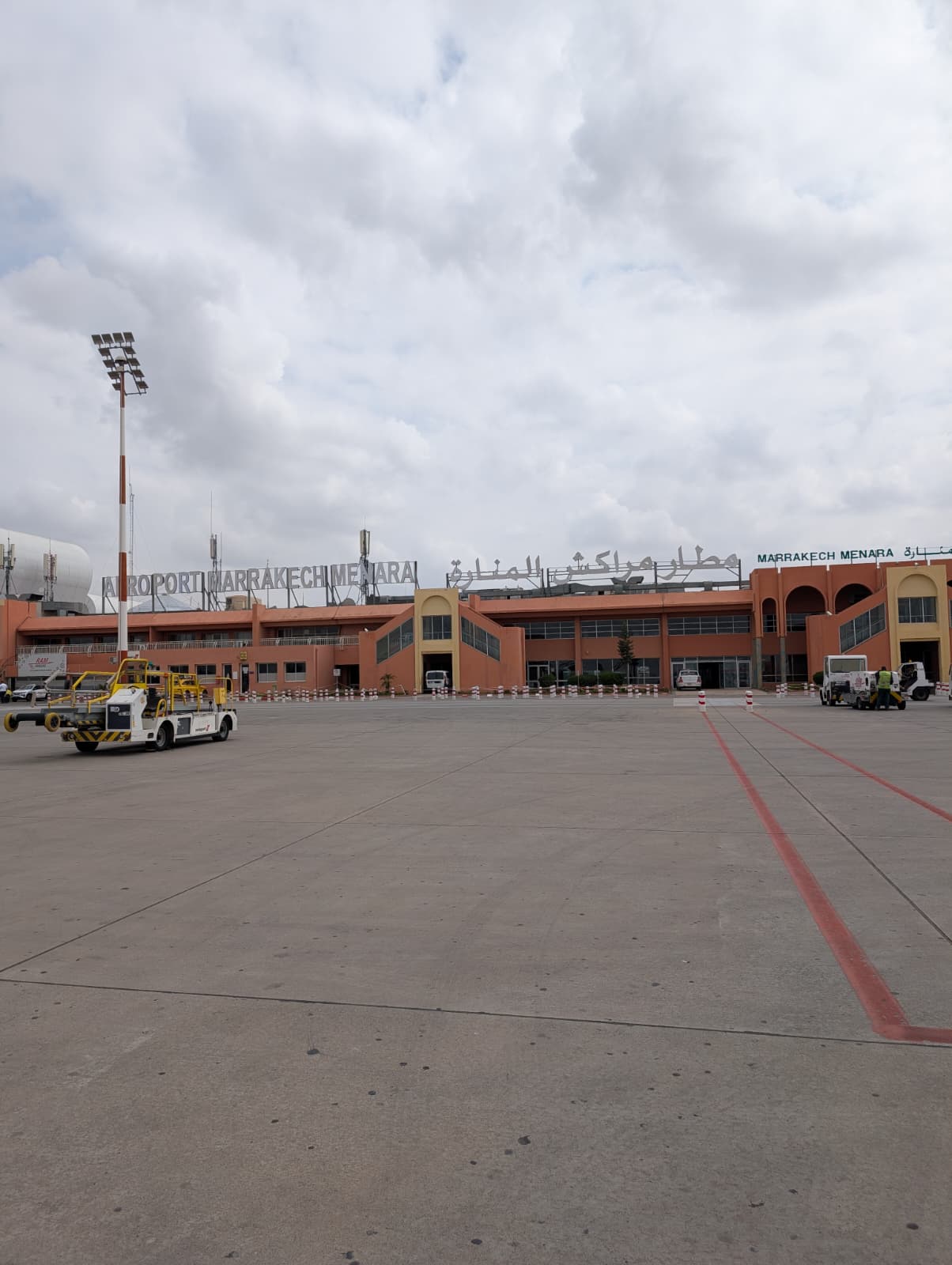
Arriving at the airport in Morocco
Your first arrival in Morocco will feel easier if your transport is organised before you leave the terminal. Keep the name, address and telephone number of your accommodation available offline, as mobile data may not work immediately.
Prearranged transfers are generally the simplest option for travellers arriving late, carrying surf equipment or visiting Morocco alone for the first time. Airport taxis are also available, but confirm how the fare is calculated before starting the journey.
Avoid accepting unsolicited transport offers without first confirming who the driver represents, the destination and the full price. If someone is collecting you, ask your accommodation where the meeting point will be and how to identify the driver.
Travellers arriving at Agadir Al Massira Airport and continuing to the coast should arrange their journey to Tamraght or Taghazout in advance, especially for evening arrivals.
Money and Payments in Morocco
The official currency of Morocco is the Moroccan dirham, usually written as MAD or DH. Although card payments are becoming increasingly common, carrying some cash remains important when traveling to Morocco for the first time.
Hotels, larger restaurants, supermarkets and established tourism businesses often accept international Visa and Mastercard payments. However, smaller cafés, local shops, market stalls, taxis and independent services may accept cash only.
It is therefore useful to travel with a combination of:
- A debit or credit card
- A backup card stored separately
- Enough cash for small daily expenses
- Smaller notes for taxis, cafés and local shops
ATMs are widely available in cities and popular tourist destinations. Whenever possible, use an ATM attached to or located inside a recognised bank. Before travelling, check whether your bank charges foreign withdrawal or payment fees.
When a card terminal or ATM offers to convert the payment into your home currency, paying in Moroccan dirhams is usually the clearer option. This allows your own bank or card provider to apply its exchange rate rather than accepting a conversion offered at the point of payment.
Currency can also be exchanged at authorised exchange offices, airports and some hotels. Keep the exchange receipt if you expect to convert unused dirhams before leaving Morocco.
Useful money tips for Morocco
- Carry small notes rather than relying only on large denominations.
- Confirm the full price before accepting a taxi ride, tour or informal service.
- Do not rely entirely on card payments, even in tourist areas.
- Keep emergency cash and a second card separate from your wallet.
- Avoid carrying all your money when exploring busy markets or medinas.
SIM Cards, Mobile Data and Wi-Fi in Morocco
Having mobile data makes a first trip to Morocco considerably easier. It allows you to use maps, contact your accommodation, check transport information and communicate through WhatsApp while travelling.
Before departure, check whether your current mobile plan includes affordable roaming in Morocco. Morocco is not always included in standard European roaming packages, so using your usual SIM can become expensive without an appropriate travel plan.
Travellers generally have three options:
Use international roaming
This is the simplest option because you keep your existing phone number and do not need to install anything. However, check your provider’s Morocco rates before using mobile data.
Install an eSIM
An eSIM can be activated digitally before departure or upon arrival, provided your phone supports the technology. This can be convenient for travellers who want mobile data immediately while keeping their regular SIM active for calls or messages.
Buy a local prepaid SIM card
Prepaid Moroccan SIM cards are available from mobile-network shops and other authorised sellers. Make sure your phone is unlocked before travelling, and bring your passport in case identification is requested during registration.
When purchasing a local SIM, ask the seller to:
- Confirm how much mobile data is included
- Activate the SIM before you leave
- Check that mobile data is working
- Explain how to view your remaining balance
- Show you how to purchase additional data if needed
Download important information before leaving the airport or accommodation, including offline maps, booking confirmations and the address of your next destination. This gives you a backup if your signal is temporarily unavailable.
Wi-Fi is available in many hotels, surf camps, restaurants and cafés, but speed and reliability vary between establishments. Remote workers should confirm the quality of the connection directly with their accommodation rather than assuming that every advertised Wi-Fi connection will support video meetings or large file transfers.
At The Happy Surfers, guests can use the house Wi-Fi throughout their stay, while mobile data remains useful when exploring Tamraght, visiting Agadir or travelling between destinations.
Transport and Taxis in Morocco
Morocco offers several ways to travel, but the most suitable option depends on the distance, destination and level of convenience you want.
Petit taxis
Petit taxis are small city taxis used for journeys within a particular town or city. Their colour varies by location, and they generally cannot take passengers far outside the city in which they operate.
For local taxi journeys:
- Ask the driver to use the meter where applicable.
- Confirm the fare before leaving if the meter is not being used.
- Carry smaller notes, as drivers may not always have change.
- Show the address or location on a map if language is a barrier.
Depending on the city and time of day, a petit taxi may pick up additional passengers travelling in a similar direction.
Grand taxis
Grand taxis operate on longer routes between towns, villages, airports and areas outside city limits. They may operate as shared taxis with several passengers or be booked privately for a direct journey.
Before entering, confirm:
- Whether the taxi is shared or private
- The total price or price per person
- The exact destination
- Whether luggage is included
- Whether the driver will take you directly to your accommodation
A private grand taxi can be convenient for groups, travellers carrying surfboards or people arriving outside normal public-transport hours.
Private airport transfers
A prearranged transfer is often the easiest option when:
- You are visiting Morocco for the first time
- Your flight arrives late at night
- You are travelling alone
- You have several bags or surf equipment
- Your accommodation is outside the arrival city
- You prefer to know the price before landing
Keep the driver’s contact details and meeting instructions available offline before your flight.
Travellers arriving at Agadir Al Massira Airport can continue to Tamraght by taxi or prearranged transfer. Guests staying with The Happy Surfers can also arrange a direct airport transfer, making the journey from Agadir Airport to the surf house simpler after a long flight.
What first-time travelers should expect in Morocco
One of the most important first time in Morocco tips is to expect contrast.
Morocco is vibrant, sometimes chaotic, and full of sensory experiences. Cities like Marrakech or Fez can feel intense, with busy streets, markets, and constant interaction. At the same time, coastal towns and rural areas offer calm, slow-paced environments.
Travelers often experience:
- Busy medinas with narrow streets
- Friendly but sometimes persistent vendors
- A mix of modern and traditional lifestyles
- A strong sense of community and local culture
Understanding these contrasts helps you adapt quickly and enjoy the experience rather than feel overwhelmed.
Morocco Culture and Customs explained simply
Respecting Morocco culture and customs is essential for a smooth trip.
Morocco is a Muslim country where traditions and social norms play an important role in daily life. This does not mean strict rules for travelers, but adapting slightly shows respect and improves interactions.
Basic cultural etiquette for visitors includes:
- Greeting people politely
- Dressing modestly, especially outside tourist areas
- Asking before taking photos of people
- Using your right hand when giving or receiving items
These small gestures are often appreciated and can lead to more positive connections with locals.
What to wear in Morocco?
Lightweight clothing that covers the shoulders and knees is a comfortable choice in cities and traditional areas.
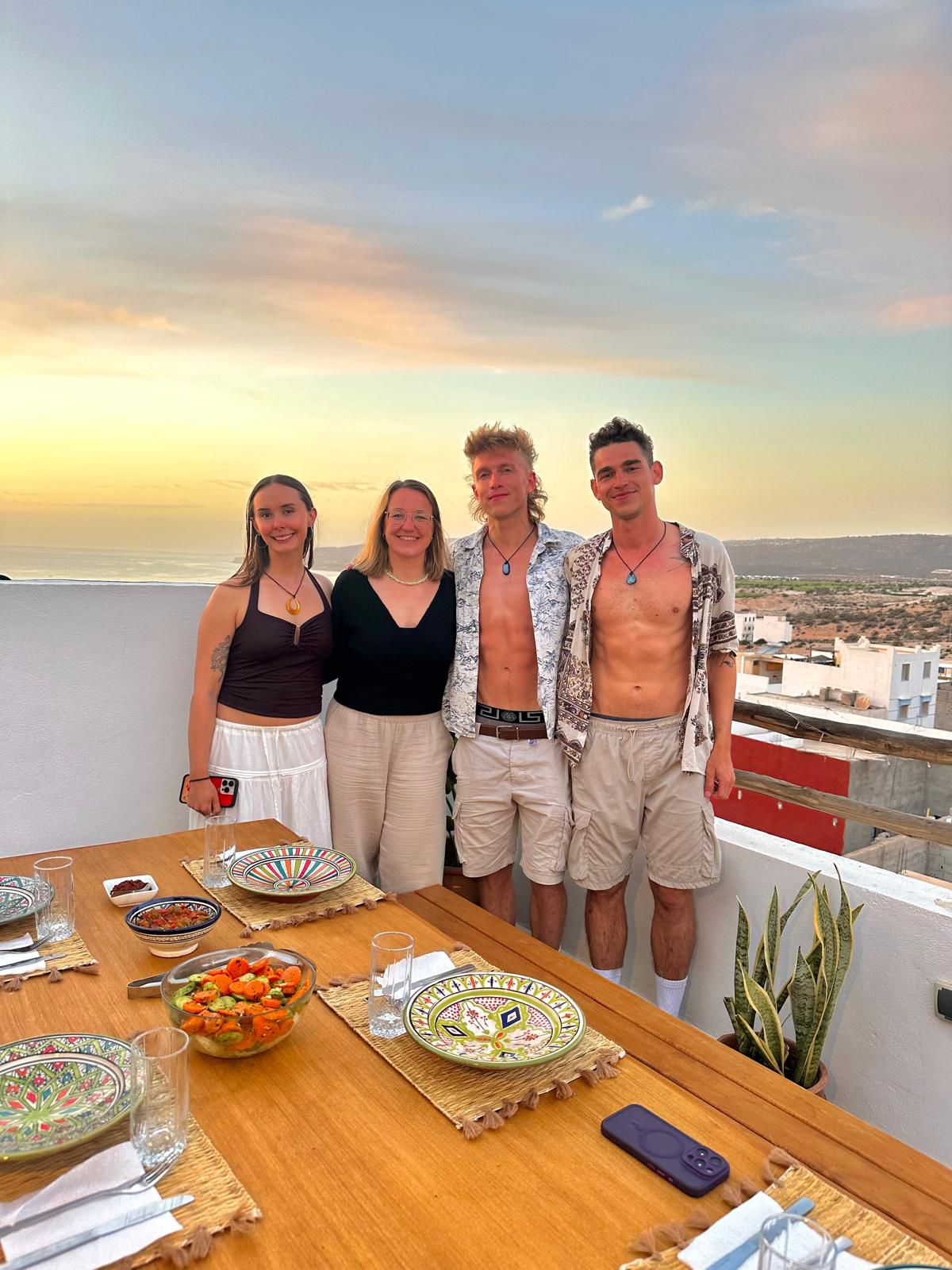
Surf towns such as Tamraght and Taghazout are generally more relaxed, but swimwear is best kept for the beach, pool or accommodation. A light layer is useful for cooler evenings, and comfortable walking shoes are essential for medinas and uneven streets.
Recommended clothing:
- Loose, breathable outfits
- Covering shoulders and knees in most settings
- Light scarves for flexibility
- Comfortable shoes for walking
Women travelling alone can find more detailed advice in our guide to solo female travel safety in Morocco.
Is Morocco safe for tourists?
Morocco is generally safe for tourists, including those traveling alone. Serious crime is rare, especially in areas frequently visited by travelers. However, like in many popular destinations, small inconveniences such as scams or persistent sellers can occur.
For Morocco solo female travel, safety comes down to awareness rather than fear. Staying in well-known areas, avoiding isolated places at night, and trusting your instincts are usually enough to feel secure.
Moroccan hospitality is strong, and many visitors are surprised by how welcoming and helpful locals can be. The key is to remain aware, not anxious.
Where to stay: from cities to coastal villages like Tamraght
Choosing where to stay in Morocco depends on the experience you’re looking for.
| Travel goal | Suitable type of destination |
|---|---|
| History, architecture and markets | Marrakech or Fez |
| Coastal culture and relaxed pace | Essaouira |
| Surfing, yoga and community stays | Tamraght |
| Busier surf-town atmosphere | Taghazout |
| Urban restaurants and modern city life | Casablanca or Rabat |
A Tamraght travel guide often highlights it as a peaceful alternative to busier destinations. It’s especially popular for travelers seeking a calm environment, surf experiences, and a strong sense of community. Travellers choosing the coast can compare Tamraght and Taghazout before deciding where to stay.
For first-time visitors, mixing both city and coastal experiences can offer the best balance.
Planning to include the Atlantic coast in your first Morocco trip? Our all-inclusive surf camp in Tamraght combines accommodation, surf coaching, equipment, daily transport, breakfast, dinner and yoga, making the practical side of a first visit much easier.
Common mistakes to avoid in Morocco
Being aware of common pitfalls can improve your trip significantly.
Overplanning every detail
Morocco is best experienced with some flexibility.
Engaging too much with persistent sellers
Polite but firm responses work best.
Ignoring cultural norms
Small adjustments make a big difference.
Not confirming prices
This can lead to misunderstandings.
Trying to do too much too fast
Allow time to rest and absorb the experience.
Avoiding these common mistakes helps you travel more comfortably and confidently.
Morocco travel packing list
A well-prepared Morocco travel packing list makes your journey easier.
Essentials include:
- Light, modest clothing
- Comfortable walking shoes
- Scarf or shawl
- Sunscreen and sunglasses
- Reusable water bottle
- Power adapter
- Small backpack for day trips
Packing for both comfort and cultural awareness ensures you are prepared for different environments. If you're going to a surf holidays, you can read our detailed article on what to pack for a surf holiday in Morocco.
How to travel sustainably in Morocco
Sustainable tourism Morocco practices are becoming increasingly important.
Traveling responsibly means:
- Supporting local business
- Reduce single-use plastic
- Respect local communities and photography preferences
- Avoid leaving waste on beaches
- Use water thoughtfully
- Respect surf etiquette and local access
Sustainable travel not only benefits local communities but also creates more meaningful experiences for you as a traveler.
Frequently asked questions
Is Morocco suitable for first-time international travellers?
Yes, provided travellers prepare for differences in transport, payment methods, cultural norms and communication. Tourist areas are accustomed to international visitors, but planning the first airport transfer and accommodation carefully makes arrival easier.
Do I need cash in Morocco?
Yes. Cards are increasingly accepted, but cash remains useful for taxis, markets, cafés, small shops and local services.
Should I buy a SIM card in Morocco?
A local SIM or eSIM can be useful for maps, transport and communication. Check that your phone is unlocked before travelling and compare it with your existing roaming plan.
What should I wear in Morocco?
Lightweight clothing that covers the shoulders and knees is comfortable in most towns. Beach areas are more relaxed, but swimwear should generally remain near the beach or accommodation.
Do I need to speak Arabic or French?
No, but learning a few polite words is useful. French is widely spoken, and English is common in many tourism businesses.
How do I get from Agadir Airport to Tamraght?
Travellers can use a prearranged transfer, airport taxi or other local transport. A prearranged transfer is usually the simplest option for late arrivals, first-time visitors and travellers carrying surf equipment.
Final thoughts: Your first trip to Morocco
Traveling to Morocco for the first time can feel like stepping into a completely new world, vibrant, rich, and full of contrasts.
With the right traveling to Morocco tips, an understanding of Morocco culture and customs, and a bit of preparation, your trip becomes much easier to navigate.
Whether you’re exploring bustling cities, relaxing by the ocean, or experiencing Morocco solo female travel, the country offers something deeply memorable.
Morocco is not about perfection, it’s about experience. And for first-time travelers, that experience often becomes the beginning of many returns.
Explore our surf and yoga packages in Morocco to see what is included and choose the stay that matches your travel dates and surf level.

0 Comments