


When comparing a surf camp vs surf retreat in Morocco, the difference is not always as clear as the names suggest.
You decide to book a surf trip to Morocco. Then the terminology starts.
One website describes itself as a surf camp. Another looks remarkably similar but calls itself a surf retreat. Somewhere else, you find a surf hotel, a surf house or even a surf-and-yoga retreat offering many of the same things.
So what is actually different?
The short answer is that there are useful differences, but the labels are not standardised.
A surf camp does not automatically mean bunk beds and parties.
A surf retreat does not automatically mean luxury.
And a surf hotel does not necessarily mean you are left completely on your own to organise your surfing.
A surf camp in Morocco usually puts surfing, community and shared daily activities at the centre of the stay. A surf retreat often combines surfing with yoga, wellness or a slower, more curated experience, while a surf hotel generally offers more privacy and independence, with surf services built around a hotel-style stay. However, these terms overlap considerably. The best choice depends less on the name and more on how much coaching, community, structure, privacy and flexibility you actually want.
Instead of choosing based on a label, compare what the week will really feel like.
Surf Camp vs Surf Retreat vs Surf Hotel
| Surf camp | Surf retreat | Surf hotel | |
|---|---|---|---|
| Main focus | Surfing + community | Surfing + broader retreat experience | Accommodation + independence |
| Surf coaching | Usually central | Usually included as part of a broader programme | May be included, optional or organised separately |
| Daily structure | Organised around surf conditions | More curated mix of surf + other activities | Usually more flexible |
| Accommodation | Shared and/or private surf-house rooms | Often smaller groups with shared/private options | Traditional hotel-style rooms |
| Meals | Often communal and included in packages | Commonly part of the experience | Depends on the hotel and board basis |
| Yoga / wellness | Sometimes available | Often an important part of the programme | Usually optional if available |
| Social atmosphere | Usually strong | Usually social but often calmer | Depends much more on the property |
| Privacy | Can range from dorms to private rooms | Often moderate to high | Usually highest |
| Flexibility | Moderate | Moderate; sometimes more structured | Usually highest |
| Best for | Beginners, solo travellers and social surfers | Travellers wanting surf + balance/wellness | Independent travellers, couples and privacy seekers |
These are tendencies, not definitions.
A high-quality surf camp may offer private double rooms and yoga.
A retreat may be extremely surf-focused.
A surf hotel may organise lessons, equipment and guiding every day.
Always compare the actual experience rather than assuming the name tells you everything.
What is a Surf Camp?
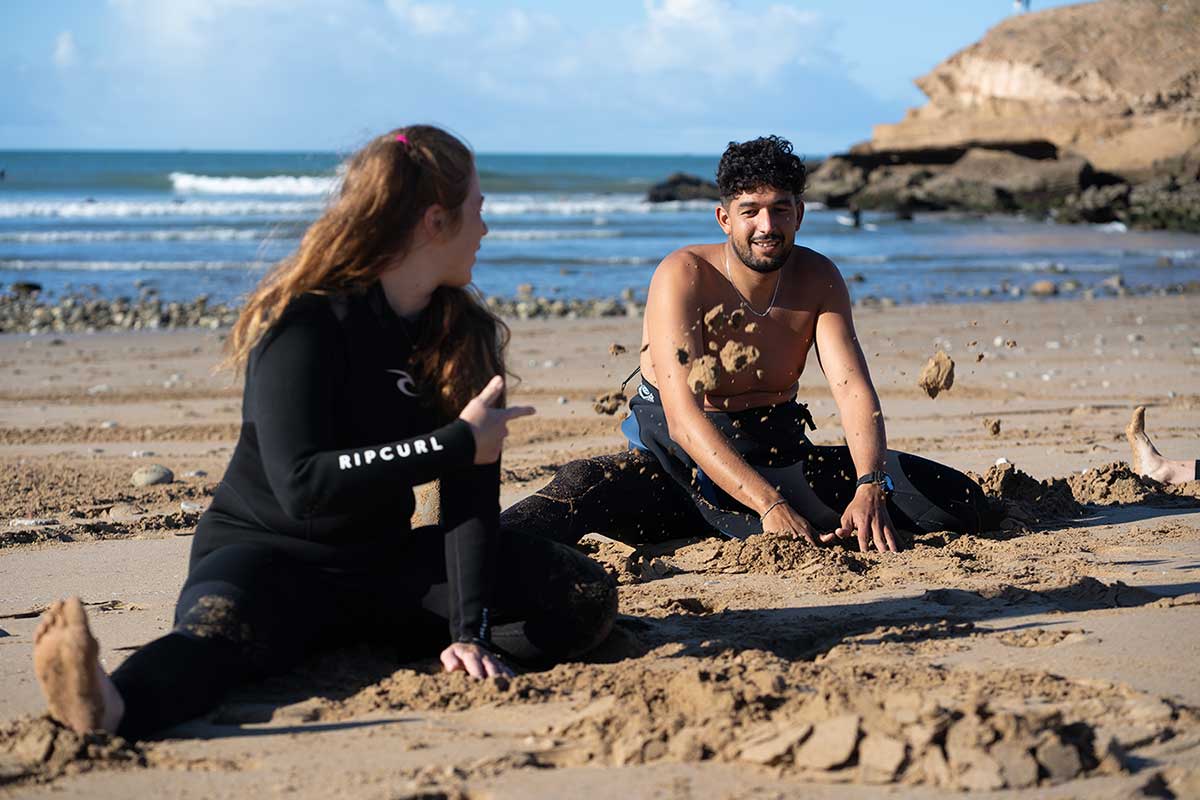
A surf camp is essentially a stay organised around surfing.
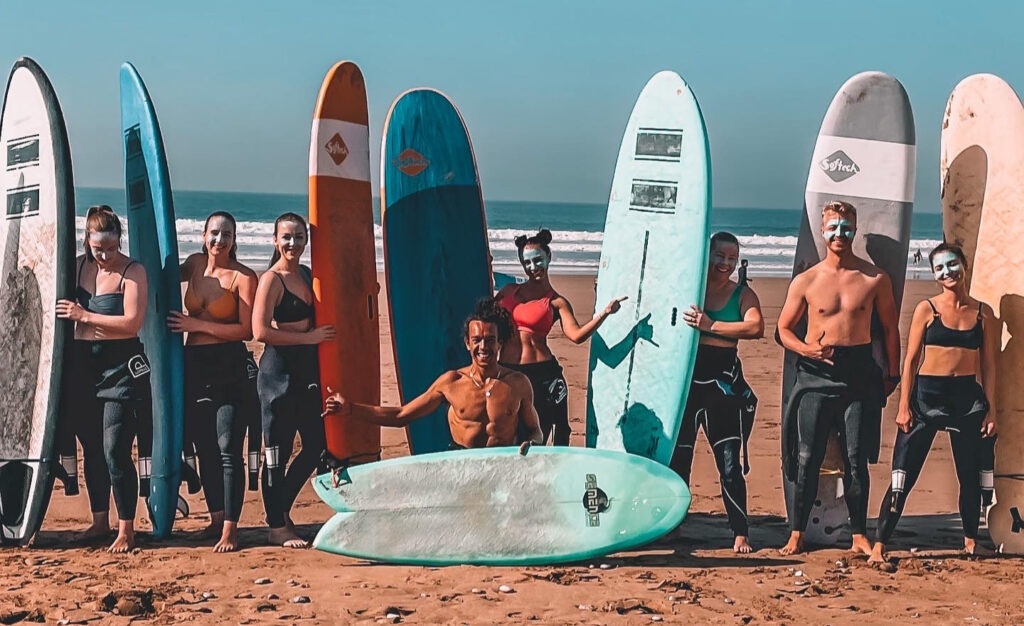
Surfing is not simply an optional activity you might add one afternoon.
It is normally one of the main reasons everyone is there.
A typical surf camp may include:
- Surf lessons or guiding
- Surfboards and wetsuits
- Transport to surf spots
- Accommodation
- Shared meals
- Free-surf opportunities
- Communal spaces
- A group of guests following a similar weekly rhythm
The exact accommodation can vary enormously.
At one end, you might find hostel-style dormitories and a young backpacker atmosphere.
At the other, you can find small surf houses with private bedrooms, carefully prepared meals, yoga and relatively small groups.
That leads to an important distinction:
“Surf camp” describes the structure of the holiday more than the standard of the bedroom.
Calling somewhere a surf camp does not tell you whether the experience is basic, comfortable, social, quiet, party-focused or high-standard.
You need to look deeper.
What does a typical surf-camp day feel like?
Often, the surf conditions provide the basic structure.
You might:
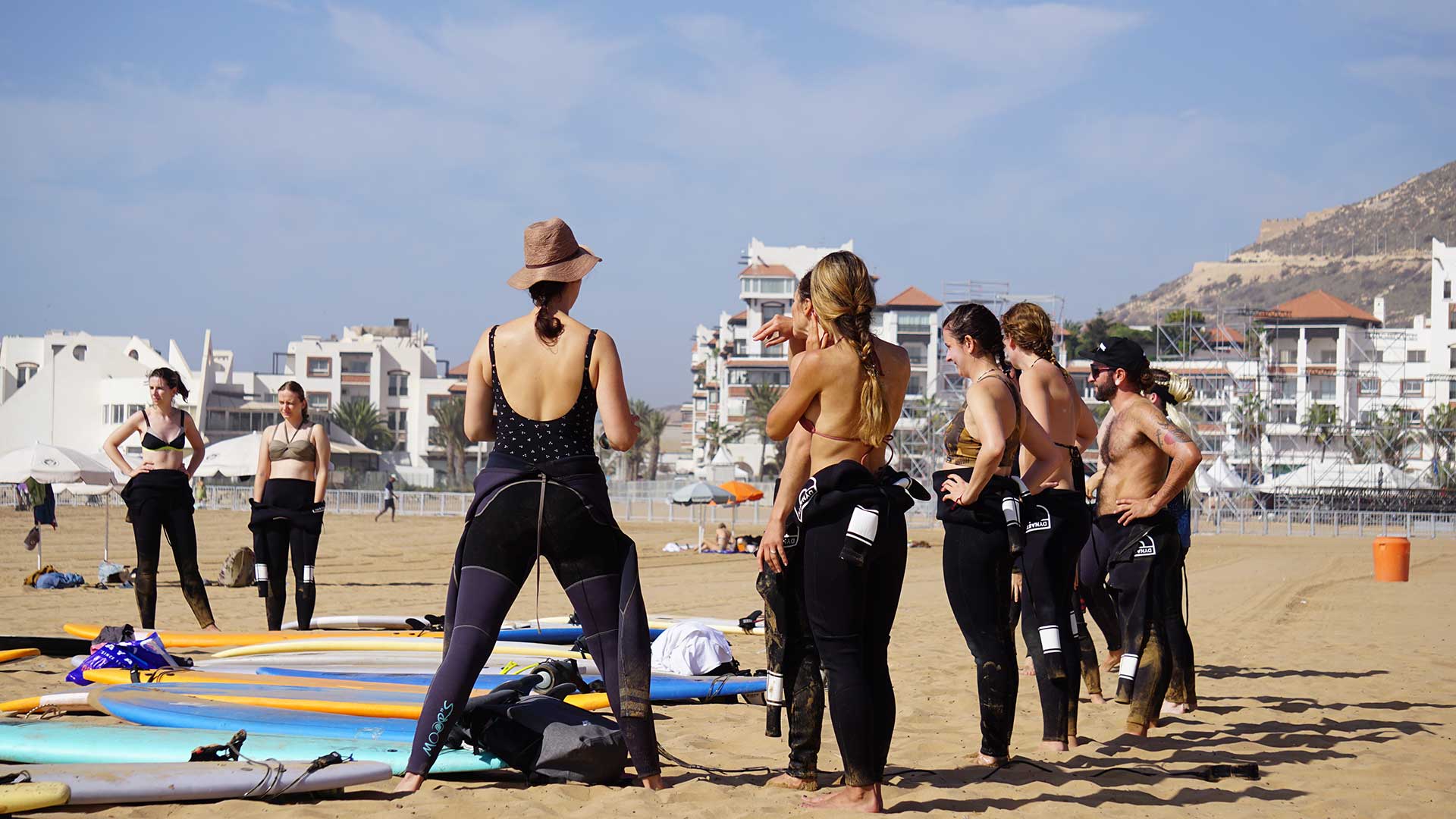
Wake up → breakfast → travel to the selected surf spot → surf lesson → beach/free surf → return to the house → free time → shared dinner.
The exact timing may change according to:
- Swell
- Wind
- Tide
- Surf level
That flexibility is normal in a surf-focused environment.
If you are a beginner, it can also remove a lot of decisions from your trip.
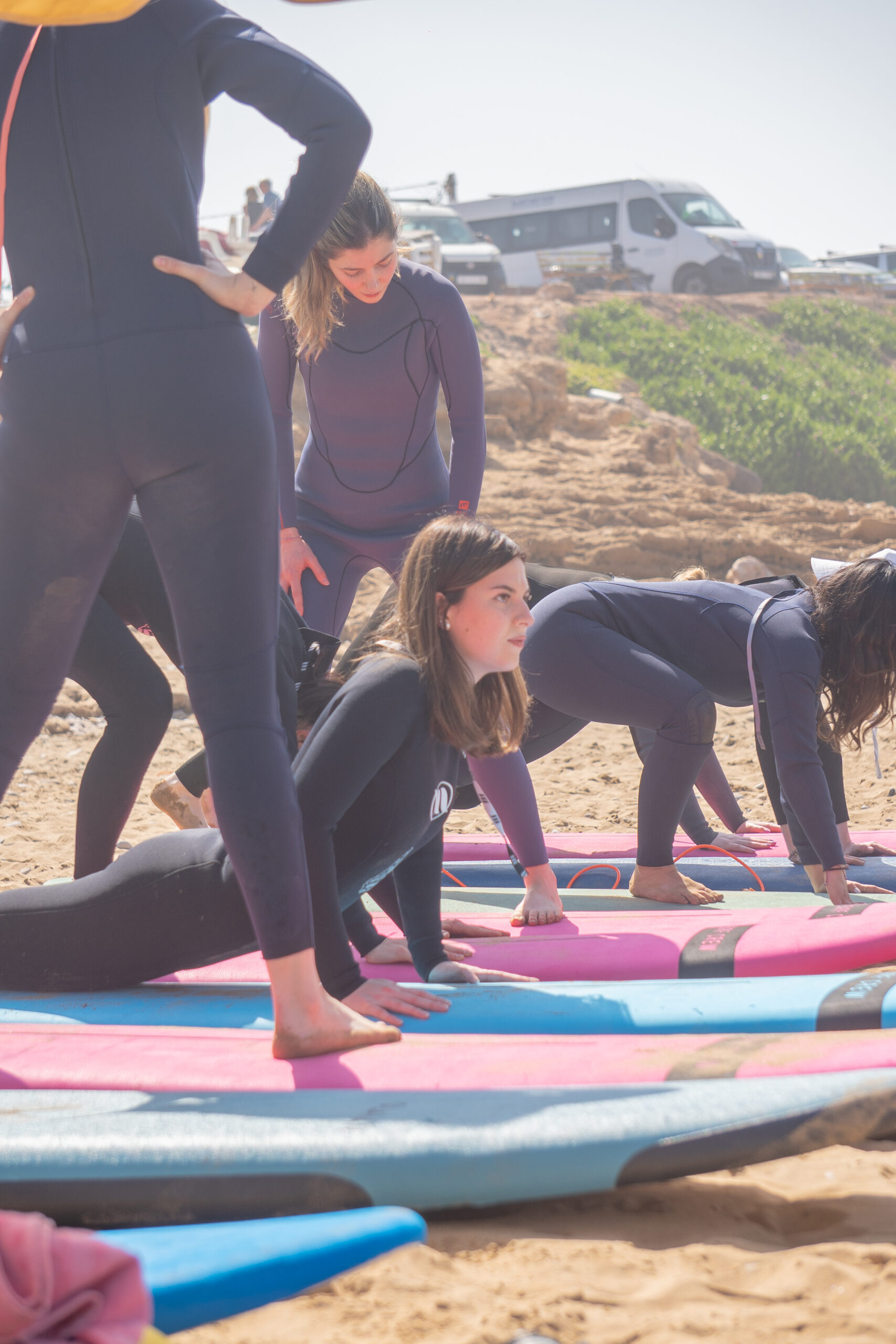
Instead of figuring out where to surf, how to get there and which equipment to rent, much of that is already organised.
What is a Surf Retreat?
A surf retreat usually suggests an experience that goes beyond surfing alone.
Surfing may still be central, but the overall week is more intentionally balanced around other elements.
Those might include:
- Yoga
- Meditation
- Recovery
- Wellness
- Shared meals
- Cultural experiences
- Creative activities
- More downtime
- Smaller groups
That does not mean every surf retreat offers all of these.
And importantly:
A surf retreat does not automatically mean a luxury retreat.
Some are high-end properties with spa treatments, premium rooms and extensive programmes.
Others are simply smaller surf houses creating a calmer, more intentional experience around surfing, yoga and community.
Does a Retreat mean every hour is Scheduled?
No.
In fact, a good retreat-style experience should still leave room to enjoy your holiday.
You may have:
Surfing in the morning.
Yoga later in the day.
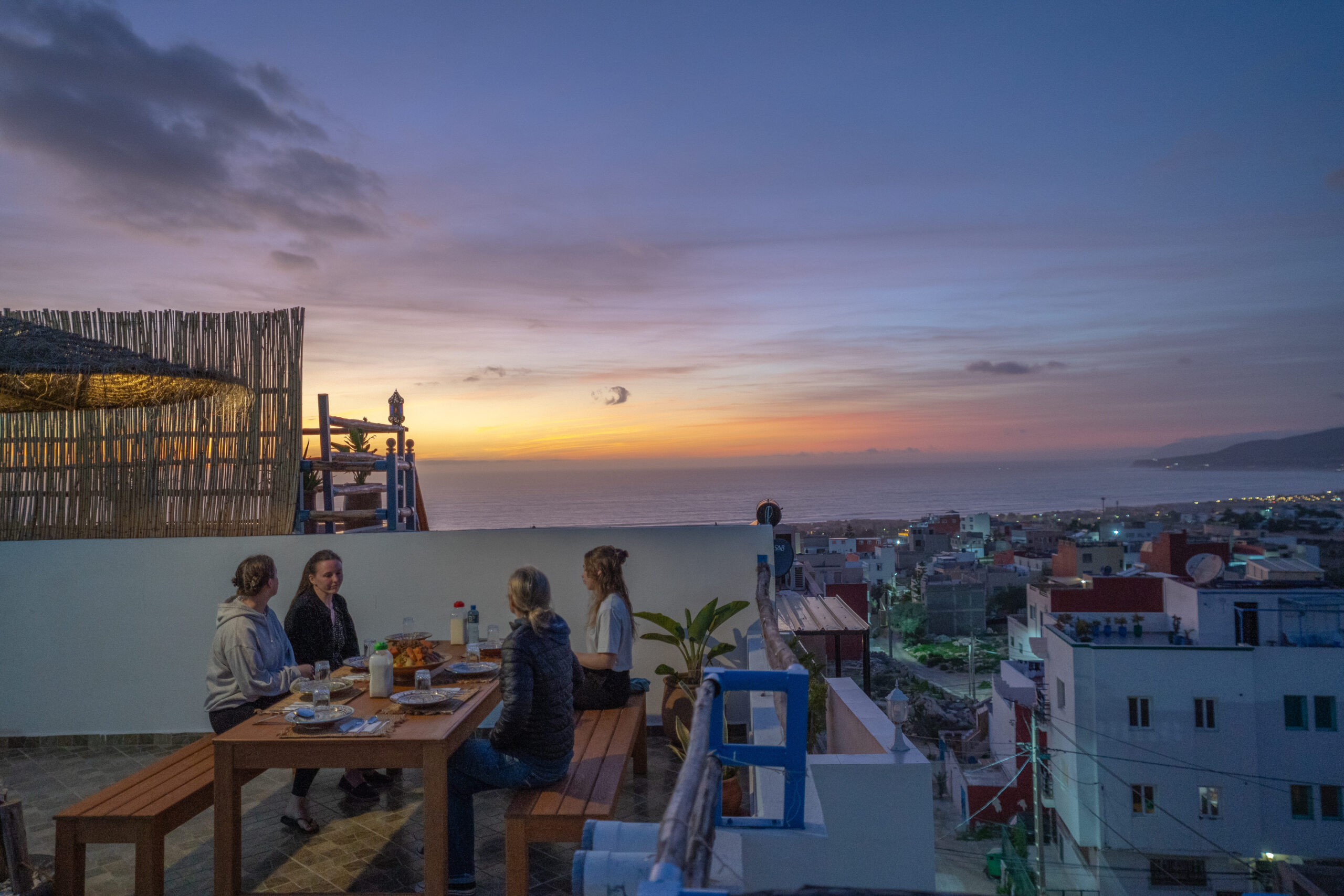
Shared dinner in the evening.
And several hours in between where nothing is compulsory.
You can:
- Go to a café
- Read
- Visit the beach
- Explore
- Nap
- Talk with other guests
- Do absolutely nothing
The term retreat should not automatically be interpreted as a rigid timetable.
If this combination of surfing, yoga, shared meals and downtime sounds appealing, our guide to what to expect from a surf and yoga retreat in Morocco explains the actual experience in more detail.
What is a Surf Hotel?
A surf hotel generally works more like a traditional hotel that caters to surfers.
The accommodation itself tends to be more central to the experience.
Compared with a typical surf camp, you may have:
- More privacy
- Hotel-style rooms
- Restaurant facilities
- More independent meal choices
- Less reliance on one group
- A more flexible daily schedule
- Optional surf lessons or guiding
You might book the room first and decide afterwards whether you want to surf.
That is different from arriving at a surf camp where surfing is already built into the rhythm of the week.
A useful generalisation is:
A surf hotel is usually accommodation first and community second. A surf camp is usually community and surfing first, with accommodation supporting the experience.
But it is only a generalisation.
Some surf hotels offer extremely complete surf packages with daily coaching, yoga, meals and transfers.
Others are essentially conventional hotels positioned near good waves.
So once again, check what is actually included.
What about a Surf House?
You will also see the term surf house everywhere in Morocco.
This one describes the physical style of accommodation more than the package.
A surf house is generally a house or guesthouse where surfers stay together.
It might operate as:
- A surf camp
- A surf retreat
- Accommodation-only
- A bed and breakfast
- A combination of several formats
So:
“Surf house” tells you more about where you stay than exactly what your holiday includes.
For example, a surf house might offer dormitories and private rooms, communal breakfasts and a terrace.
One guest could book a complete surf package.
Another might book only accommodation.
A third could add yoga or individual surf days.
The building is the surf house.
The experience you book inside it determines whether your stay feels more like a camp, retreat or independent holiday.
How different does the week actually feel?
This is where the labels become more useful.
Forget the terminology for a moment and imagine three different holidays.
A week at a Surf Camp
You wake up knowing surfing is probably the main event of the day.
You eat breakfast with the other guests.
The instructors select a surf spot based on the conditions.
You travel together.
You surf together.
You return to the house.
Later, you might relax independently before meeting again for dinner.
There is structure, but there is still free time.
The group naturally spends a significant amount of time together.
A week at a Surf Retreat
The group experience may feel similar, but surfing is deliberately balanced with other activities.
Perhaps the day includes:
surf + yoga
or:
surf + wellness
or:
surf + cultural activity
The atmosphere may be slower and the programme more curated.
The aim is not necessarily to maximise every possible hour in the ocean.
A week at a Surf Hotel
You have much more control over the day.
You might wake up and decide:
- To surf
- Not to surf
- To eat somewhere else
- To rent a car
- To visit another town
- To book a lesson
- To sleep until late
There may be excellent surf services available.
But your schedule does not necessarily depend on the people staying in the rooms around you.
That independence is often the main advantage.
Which is best for a Beginner surfer?
For a complete beginner, a good surf camp or surf retreat is often the easiest format.
Not because a surf hotel cannot provide excellent instruction.
But your first surf trip involves much more than simply finding a beach.
You may need:
- Surf coaching
- A board
- A wetsuit
- Transport
- Beginner-appropriate conditions
- Help choosing the correct beach
- Opportunities to practise
- Feedback over several days
Having those pieces organised removes a considerable amount of friction.
A beginner can then focus on:
learning to surf
instead of:
organising a surf trip.
If you are deciding how much coaching you actually need, read our guide to how many surf lessons a beginner needs.
And if you are comparing the financial value of a full package against booking everything independently, our guide to whether an all-inclusive surf camp in Morocco is worth it looks at that question separately.
Which is best for Solo Travellers?
If meeting people is important, surf camps and surf retreats usually have an advantage.
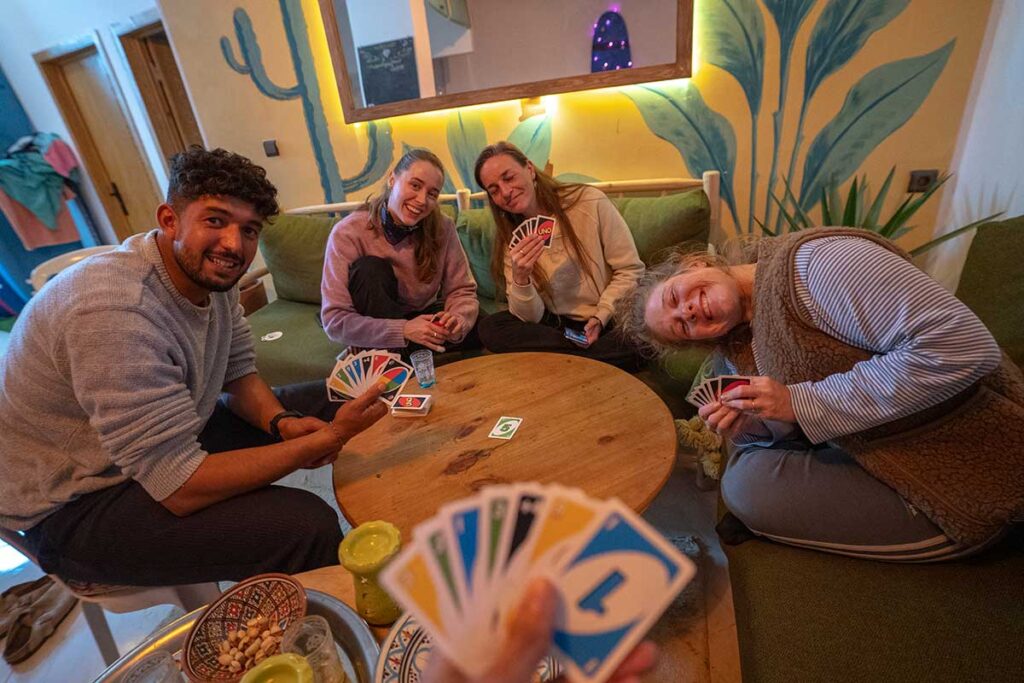
You do not need to walk into a hostel bar and introduce yourself to twenty strangers.
The activity itself creates the connection.
You:
- Surf together
- Travel to the beach together
- Eat together
- Relax in the same communal areas
- Share the same beginner frustrations and victories
That makes socialising much more natural.
And importantly:
Social does not have to mean party.
Some surf camps have a strong nightlife culture.
Others deliberately create a relaxed atmosphere built around surfing, dinners and communal time rather than partying.
A surf hotel may suit a solo traveller who values privacy more highly or is comfortable organising their own social life.
For a deeper comparison of rooms, atmosphere and what to check when travelling alone, read our Surf Camp in Morocco for Solo Travellers guide.
What about Couples?
Couples sometimes assume a hotel is automatically the best fit because they want privacy.
That is not necessarily true.
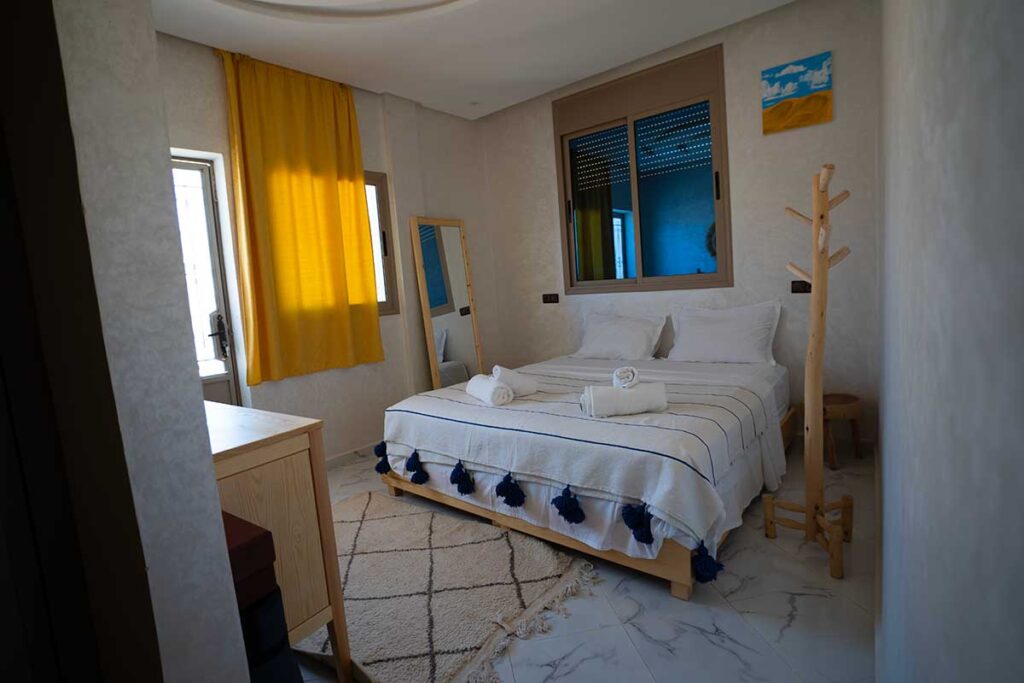
A surf camp offering private rooms can give you:
privacy when you want it + community when you want it.
You can spend the surf session and dinner with the group, then return to your own room rather than a dormitory.
A surf hotel can still be a better choice if you want:
- Maximum independence
- More hotel-style service
- Very little group structure
- To make completely separate plans each day
But do not automatically reject surf camps because you picture shared bedrooms.
Many now offer several room types.
What if you want Surfing and Yoga?
If the combination of surfing and yoga is important to you, the distinction shifts.
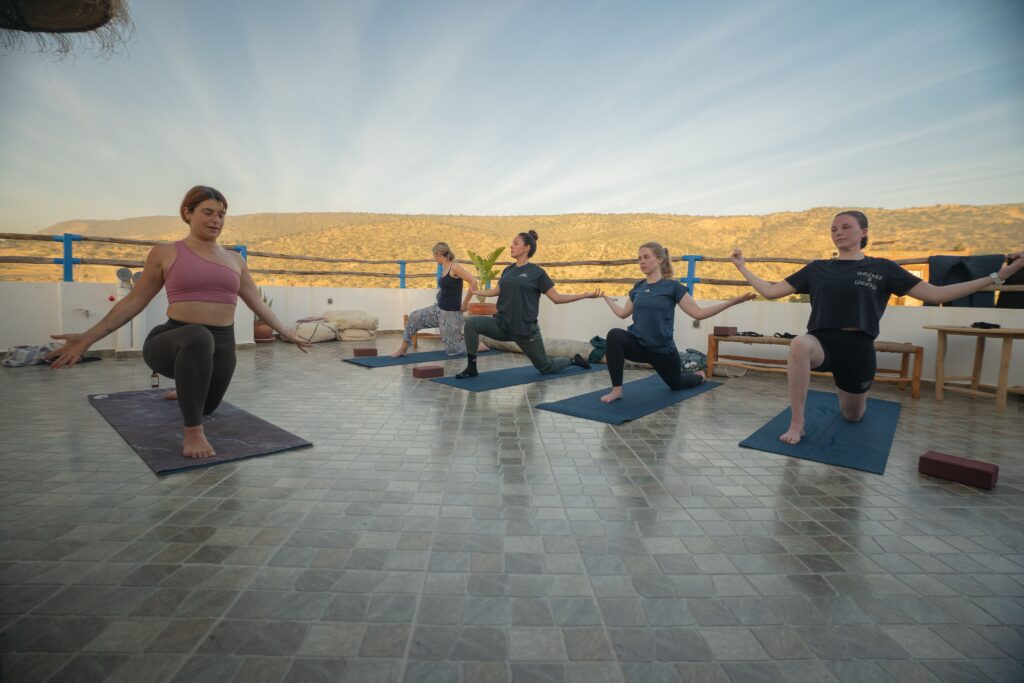
A surf retreat or retreat-style surf camp may make more sense than a hotel where surfing and yoga are simply two independent services available to book.
The difference is integration.
Instead of:
Book surf lesson.
Book separate yoga studio.
Organise your own meals.
Work out the schedule yourself.
the week is designed so the activities fit together.
That may mean:
- Surf sessions planned around conditions
- Yoga scheduled around surfing
- Shared meals
- Free time for recovery
- A group following the same broad rhythm
This is exactly where the lines between surf camp and surf retreat become blurry.
And that is fine.
The experience matters more than forcing the property into one category.
What if you already surf independently?
For an independent intermediate or advanced surfer, the decision changes again.
You may not need:
- Beginner surf lessons
- Constant group coaching
- Beginner boards
- Highly structured days
A surf hotel can therefore become attractive because you have the freedom to build your own trip.
But a surf camp can still provide significant value if it offers:
- Surf guiding
- Local spot knowledge
- Daily transport
- Suitable boards
- Forecast knowledge
- Flexible surf groups
For an experienced surfer, the useful question is often:
Do I want local surf logistics handled for me?
If yes, a surf camp with good guiding can still be a much better fit than organising every session independently.
How much structure do you want?
This may actually be the most useful question in the entire comparison.
Imagine a loose spectrum:
More Curated
Surf retreat
Surfing plus intentionally selected activities such as yoga or wellness.
↓
Structured, but with Free Time
Surf camp
Surfing is organised, meals and group time create structure, but significant free time remains.
↓
Maximum Independence
Surf hotel
You largely create your own schedule and use the available services when you want them.
That does not mean every property fits neatly onto the scale.
Some retreats offer enormous freedom.
Some camps have very full schedules.
Some hotels sell complete surf weeks.
So before booking, check an actual example itinerary rather than relying on the name.
Which is Cheaper: Surf Camp, Surf Retreat or Surf Hotel?
There is no universal winner.
A surf hotel can initially appear cheaper if you are comparing:
hotel room
against:
seven-night surf package.
But that is not necessarily an equivalent comparison.
You may still need to add:
- Surf lessons
- Equipment rental
- Transport
- Meals
- Yoga
- Airport transfers
A retreat may look more expensive because many of those services are already included.
A surf camp can offer excellent value when you actually use its coaching, equipment, food and transport.
But an independent surfer who does not need those things may spend less at a hotel or accommodation-only property.
Rather than repeating the full cost comparison here, see our guide:
Is an All-Inclusive Surf Camp in Morocco Worth It? Costs, Inclusions and Who It Suits
The important rule is:
Compare the total holiday, not just the nightly accommodation price.
Which experience sounds most like you?
| If you want... | Start by looking at... |
|---|---|
| A social week built around learning to surf | Surf camp |
| Surf + yoga/wellness + a calmer curated experience | Surf retreat / camp |
| Maximum privacy and independence | Surf hotel |
| To arrive alone and easily meet people | Surf camp / retreat |
| A private room while still having a social week | Surf camp / retreat with private rooms |
| To organise every day yourself | Surf hotel / independent accommodation |
| Daily coaching, equipment and transport organised | Surf camp / retreat |
| Local surf guiding without beginner-style programming | Surf camp with guiding / surf hotel with surf services |
| Very little group structure | Surf hotel |
| A balance of organised activities and genuine free time | Retreat-style surf camp |
Use this as a starting point, not a rulebook.
The individual property still matters more than the category.
What should you check before booking any of them?
Once you have an idea which style suits you, stop looking at the label and check the actual details.
Surfing
- How many coached sessions are included?
- Are lessons appropriate for your level?
- Is surf guiding offered?
- Can you free surf?
- Is equipment included?
- Is transport to surf spots included?
Accommodation
- Dorm, twin or private rooms?
- Shared or private bathrooms?
- How many guests can stay?
- What are the communal areas like?
Food
- Which meals are included?
- Are meals communal?
- Are dietary requirements accommodated?
Atmosphere
- Party-focused?
- Calm?
- Social?
- Wellness-focused?
- Mostly independent?
Schedule
- How much is organised?
- How much free time is there?
- Are activities optional?
Extras
- Yoga?
- Surfskate?
- Excursions?
- Hammam?
- Airport transfers?
This is ultimately far more useful than asking:
“Is a retreat better than a camp?”
For a broader property-by-property decision framework, read How to Choose the Perfect Surf Retreat in Morocco.
Where does The Happy Surfers fit?
This is exactly why we describe The Happy Surfers as:
a small surf and yoga camp with a retreat-style experience.
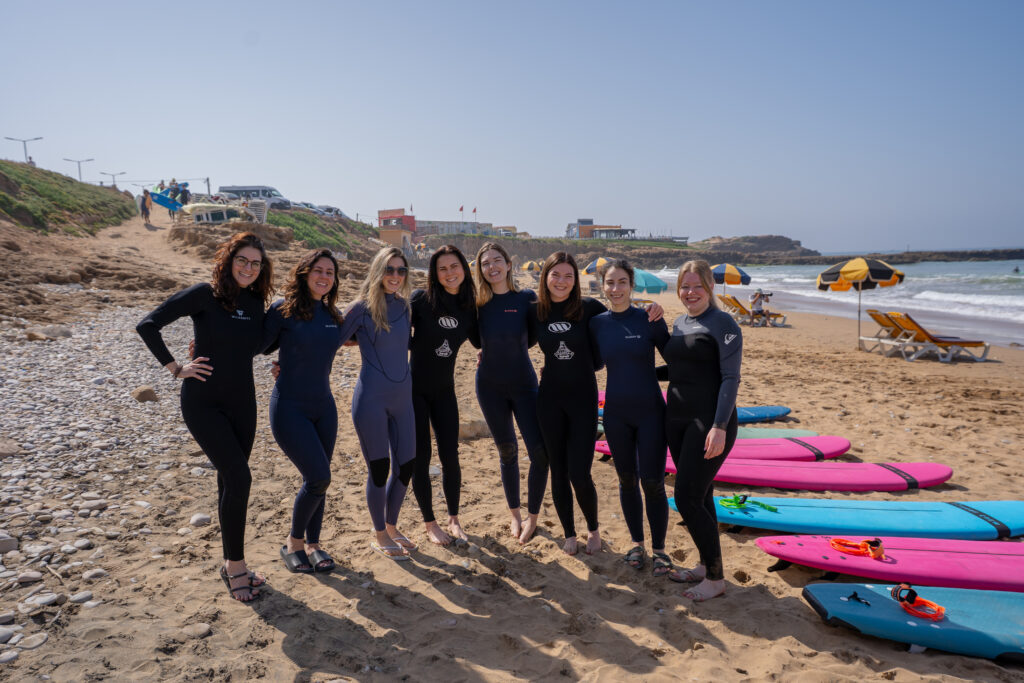
We are fundamentally a surf camp.
Surfing is central to the week.
Our standard seven-night surf programmes include:
- 6 coached surf lessons
- 6 additional free-surf opportunities
- Surfboard and wetsuit
- Daily transport to the selected surf spot
- Surfskate
- Accommodation
- Agadir aiport pick up at arrival
- Breakfast and dinner
Our Surf & Yoga package also includes:
- 6 yoga classes
But the overall experience has several retreat-style characteristics.
Small Group
The surf house accommodates a maximum of 18 guests.
Several Room Types
You can choose between:
- Triple rooms
- Twin rooms
- Private double rooms
So joining a surf camp does not require sleeping in a large dormitory.
Social, but NOT a Party Camp
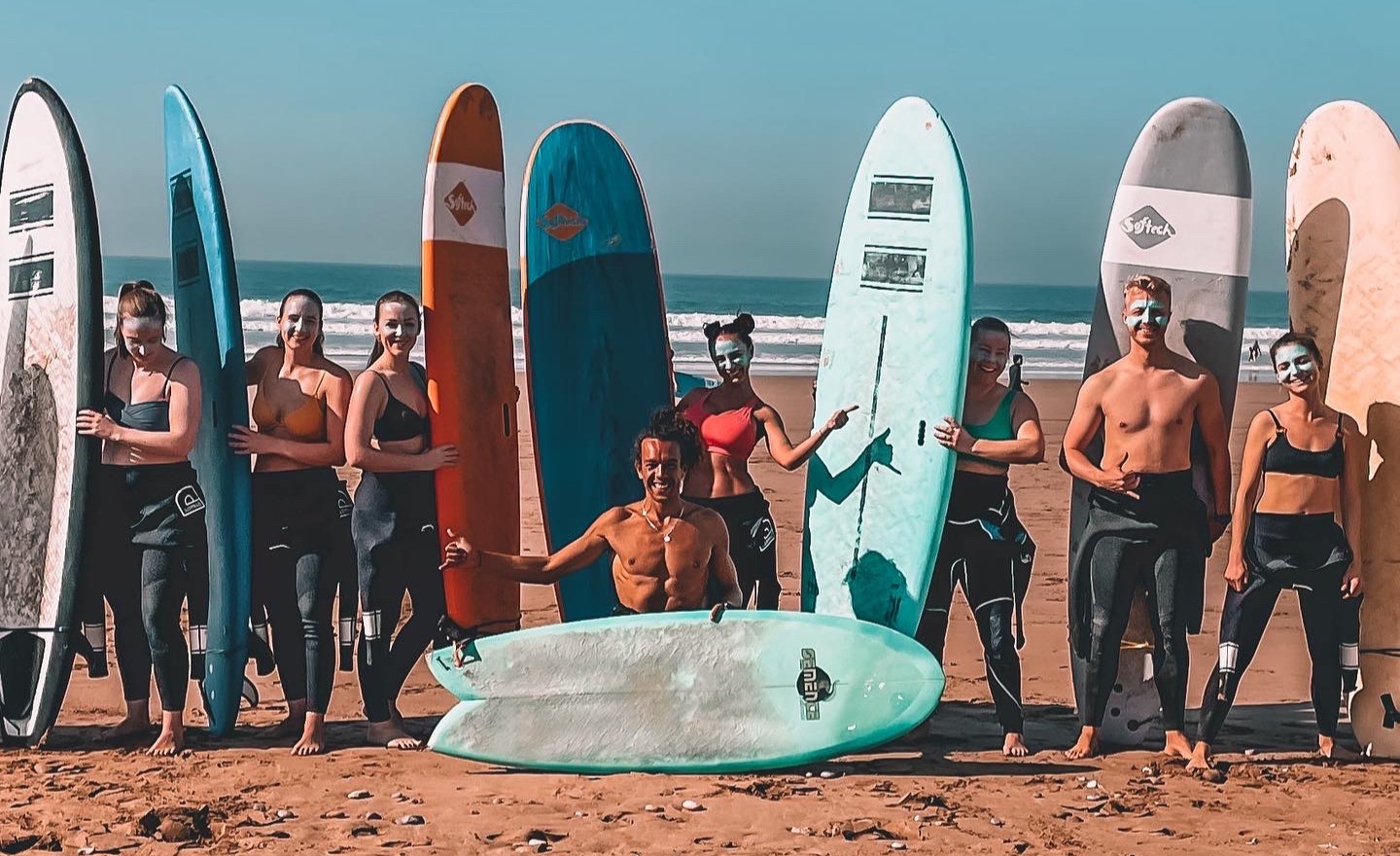
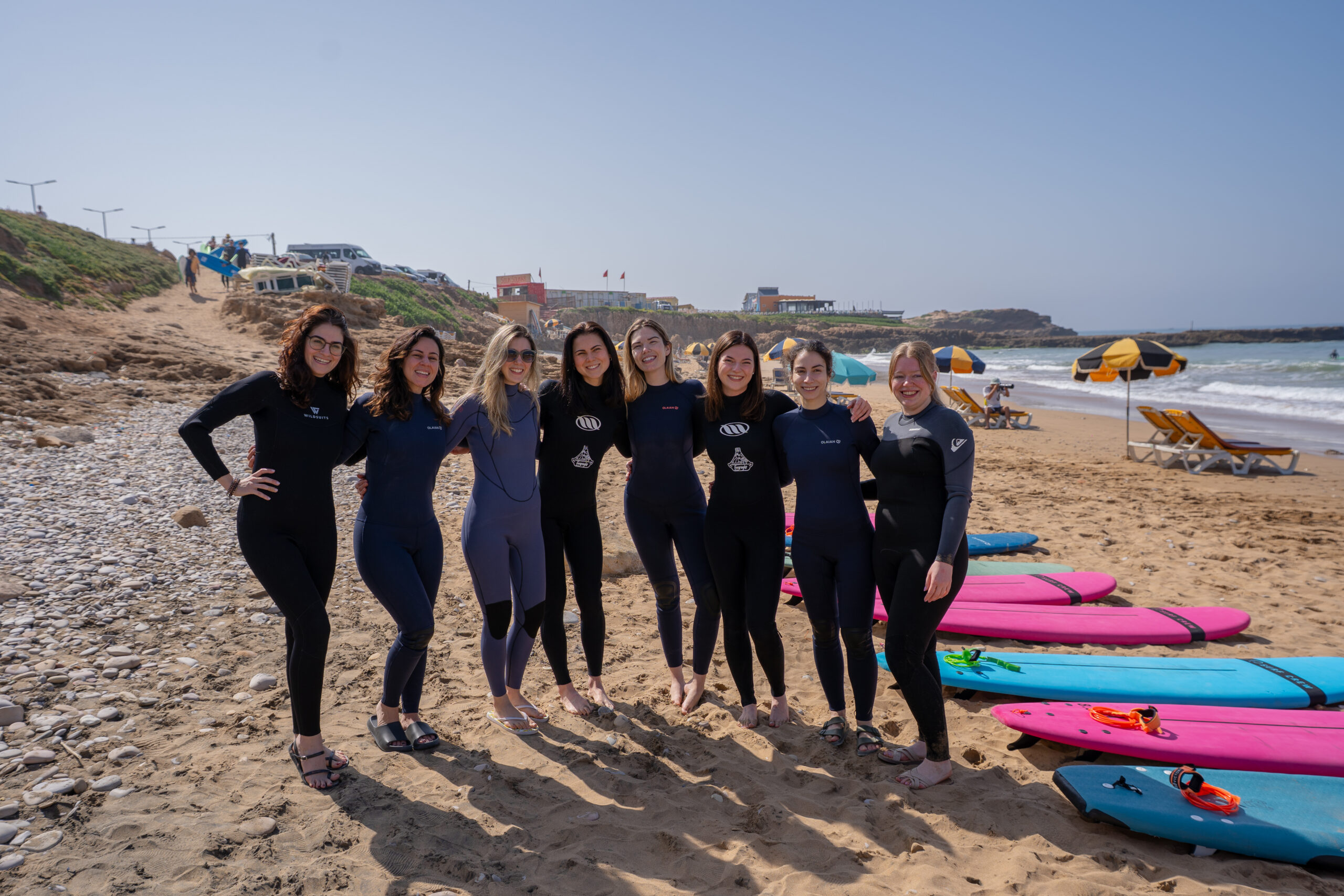
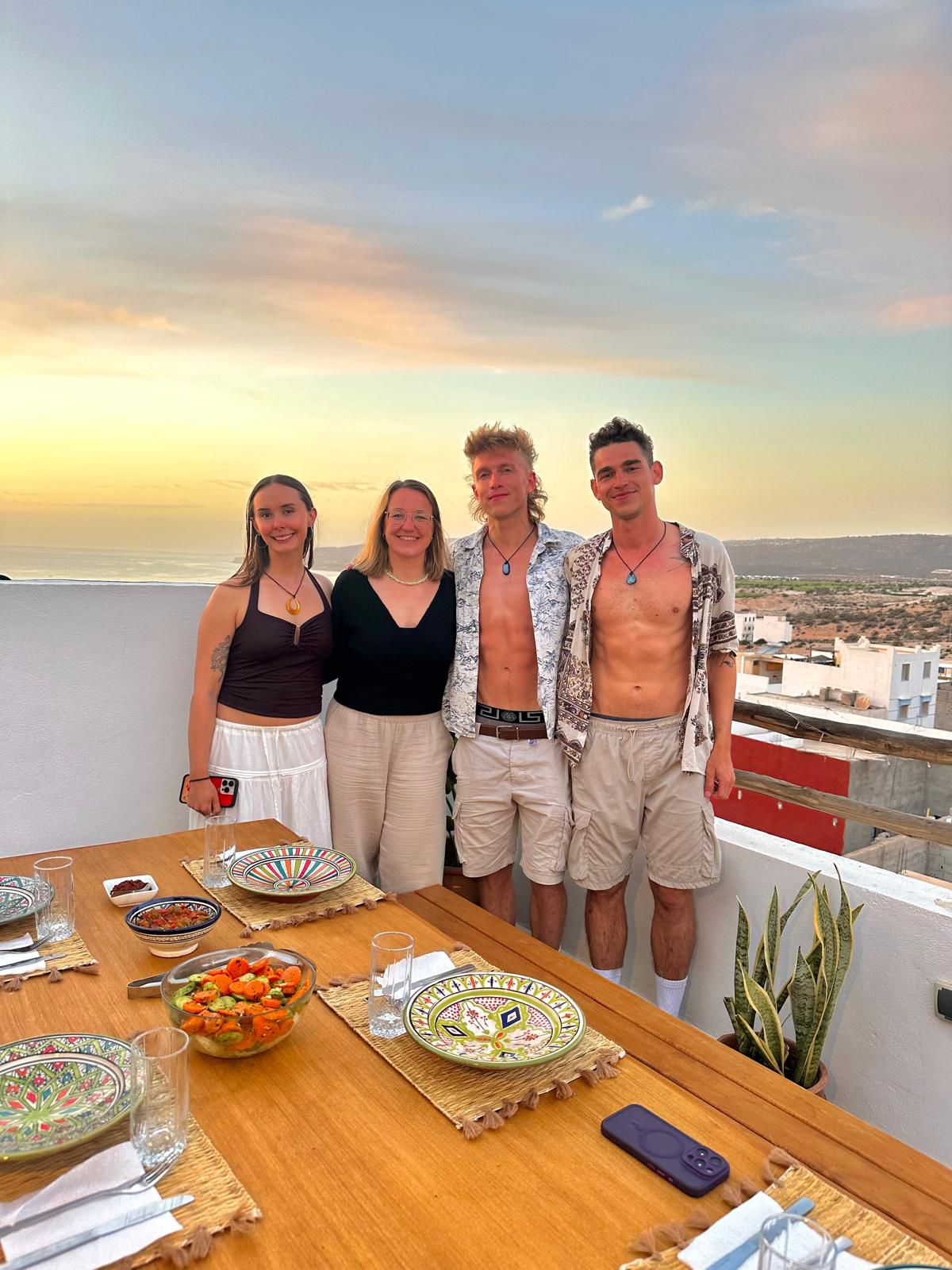
Shared surfing, breakfast, dinner and communal areas naturally make the stay social.
But the focus is not nightlife.
We aim for a relaxed, friendly atmosphere where people can spend time together without feeling that every evening needs to become a party.
Structured, but NOT Over-Scheduled
Surfing provides the main rhythm of the week.
Yoga is integrated into the Surf & Yoga programme.
But we deliberately leave room for:
- Cafés
- Beach time
- Exploring Tamraght
- Rest
- Optional activities
- Simply doing nothing
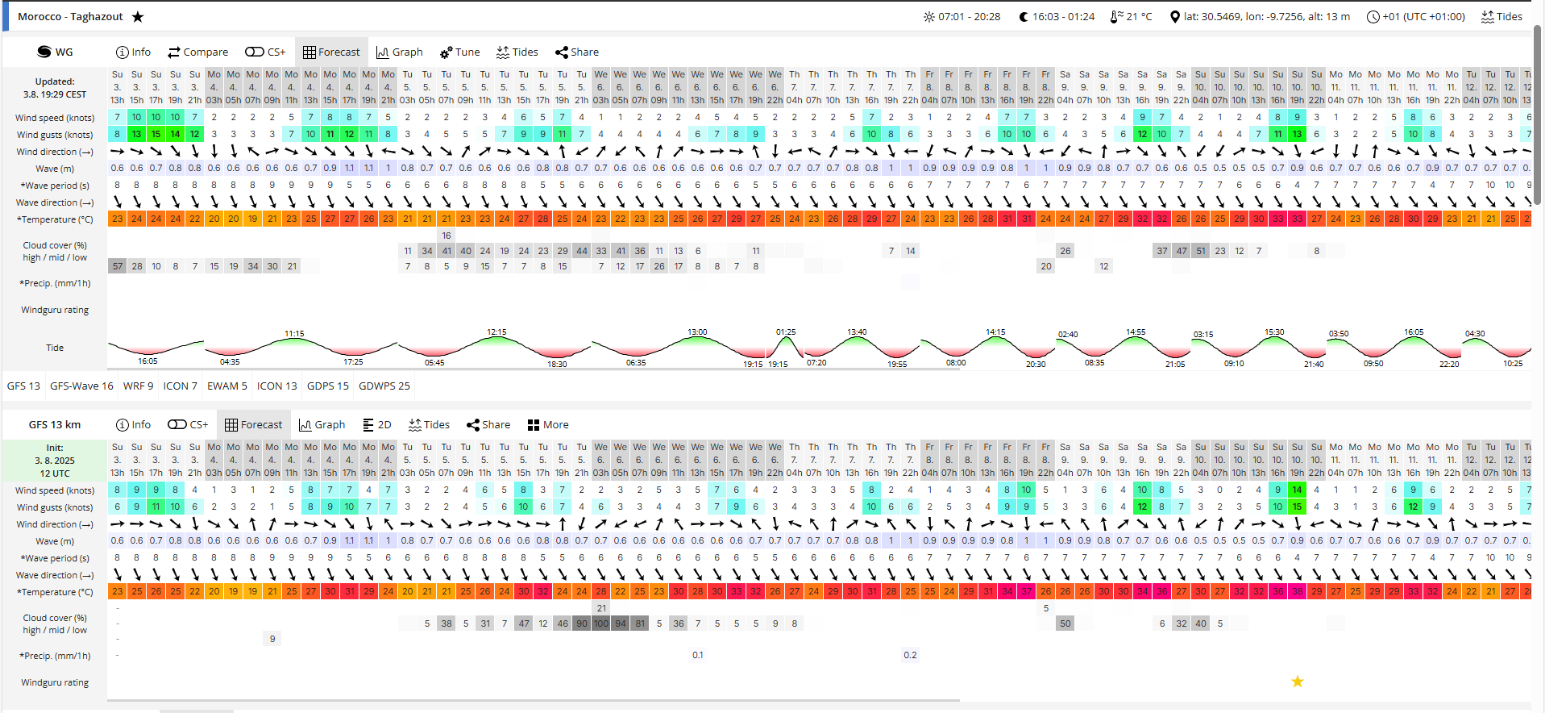
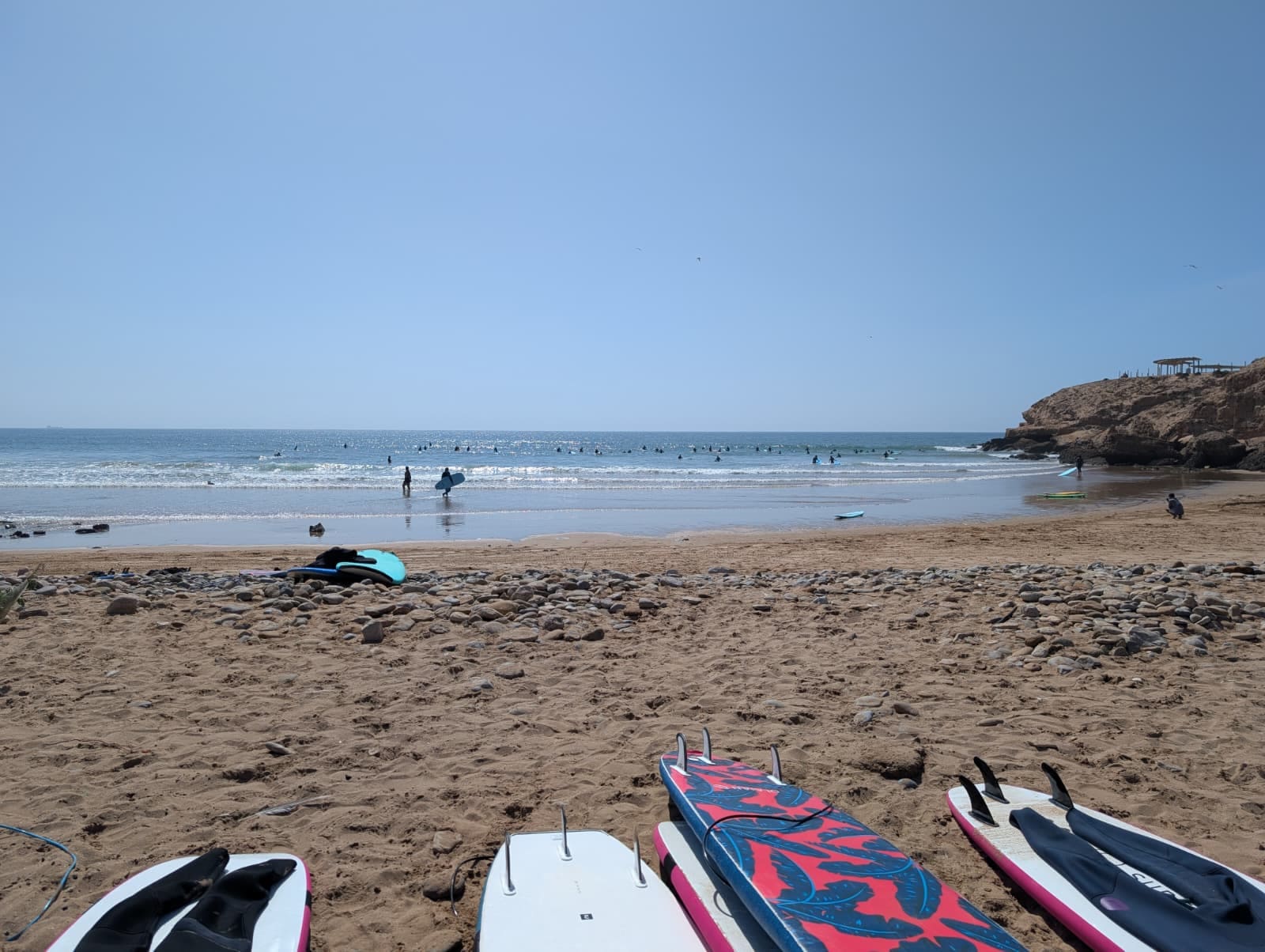
The surf spot changes with the conditions
We do not promise that the group will surf one fixed beach every day.
Swell, wind, tide and ability influence where the session takes place.
That is why daily surf transport is part of the experience.
So if you are trying to classify us precisely:
We are not a traditional hotel.
We are not a luxury wellness retreat.
And we are not a party hostel with surfboards.
We are a small surf camp with a retreat-style experience: structured surfing, optional yoga-focused packages, shared meals, a social house and enough free time to still feel like you are on holiday.
You can explore our surf camp in Tamraght or see the current all-inclusive surf packages to compare the different ways to stay.
Frequently Asked Questions
What Is the Difference Between a Surf Camp and a Surf Retreat?
A surf camp usually places surfing and the social group experience at the centre of the holiday.
A surf retreat often combines surfing with yoga, wellness, recovery or other curated activities.
However, the terms overlap considerably. Some surf camps provide a retreat-style experience, and some retreats are extremely surf-focused.
Check the actual programme rather than relying on the name.
Is a Surf Retreat More Expensive Than a Surf Camp?
Not necessarily.
Price depends on accommodation, coaching, meals, activities, group size and overall standard.
A retreat may cost more if it includes additional wellness activities or higher-end accommodation, but there is no rule saying retreats must be more expensive.
Is a Surf Camp Only for Young Backpackers?
No.
Surf camps vary enormously.
Some are backpacker-oriented and party-focused, while others attract guests in their late twenties, thirties, forties and beyond and offer private rooms and calmer environments.
Check the atmosphere and typical guest profile before booking.
Do You Have to Stay in a Dorm at a Surf Camp?
No.
Many surf camps offer private and twin rooms alongside dormitories.
At The Happy Surfers, guests can choose dorm, twin or private double accommodation depending on availability.
Is a Surf Retreat Always Luxury?
No.
“Retreat” describes the style of experience more than a guaranteed accommodation standard.
Some are luxury retreats; others are small, comfortable guesthouses built around surfing, yoga and community.
What Is the Difference Between a Surf House and a Surf Camp?
A surf house generally describes the accommodation itself: a house or guesthouse where surfers stay.
A surf camp describes more of the organised experience around surfing.
A surf house can therefore operate as a surf camp, retreat, B&B or accommodation-only property.
Is a Surf Hotel Better for Couples?
It can be if maximum privacy and independence are priorities.
But couples can also stay at a surf camp or retreat in a private room and enjoy both privacy and a social group experience.
The room type and atmosphere matter more than the label.
Which Is Best for Solo Travellers?
A surf camp or surf retreat often makes meeting people easier because guests naturally spend time together during surfing, transport and meals.
A surf hotel can be better if you value independence and privacy more highly than built-in social interaction.
Which Is Best for Beginner Surfers?
A good surf camp or retreat is often particularly convenient because lessons, equipment, transport and surf-spot selection can all be organised as part of the stay.
A surf hotel can also work if it offers a strong beginner surf programme.
Which Is Best for Intermediate or Advanced Surfers?
It depends on what you need.
An independent surfer may prefer a surf hotel or accommodation-only stay, while a camp offering surf guiding and daily spot transport can provide valuable local knowledge without requiring beginner coaching.
Does a Surf Retreat Mean Yoga Is Included?
Not always.
Yoga is common in surf retreats, but it should never be assumed from the word “retreat”.
Check the exact number of classes and whether they are included in the package price.
Are Meals Included at Surf Camps and Retreats?
Often, but not universally.
Many packages include breakfast and dinner, while others offer full board or accommodation-only options.
Surf hotels may offer breakfast, half-board, full-board or restaurant dining depending on the property.
Always compare the actual inclusion list.
How Do I Know Which Type Is Right for Me?
Ask yourself five questions:
- How much surfing support do I need?
- How social do I want the week to be?
- How much privacy do I want?
- Do I want yoga or wellness activities integrated into the stay?
- Do I want my days organised for me or mostly independent?
Your answers will usually tell you more than the words “camp”, “retreat” or “hotel”.
Final Advice: Choose the Experience, not the Label
Surf camp.
Surf retreat.
Surf hotel.
Surf house.
The terminology can make choosing a Morocco surf trip feel more complicated than it really is.
The simplest solution is to stop asking:
“Which category is best?”
and start asking:
“What do I actually want my week to feel like?”
If you want surfing to be the centre of the holiday, organised coaching and a built-in social group, look closely at surf camps.
If you want surfing balanced with yoga, wellness and a more curated rhythm, a surf retreat or retreat-style surf camp may suit you better.
If you want maximum privacy and freedom to build each day independently, start with surf hotels or independent accommodation.
Then look beyond the label.
Check:
the rooms, the number of surf sessions, the meals, the group size, the atmosphere, the free time and what is actually included.
That is how you find the right experience.
At The Happy Surfers, we sit intentionally between two of these categories: a small surf and yoga camp with a retreat-style experience.
You get organised surfing, equipment, daily surf transport, shared meals and a social group, while still having private-room options, yoga if you want it, a maximum of 16 guests and enough free time to enjoy Tamraght at your own pace.
Think that sounds like your kind of surf trip? Explore our all-inclusive surf packages in Tamraght and choose the experience and room that suit you best.


0 Comments